沉寂了很久,接下来小编要朝着目标努力了。
目前初步规划了2期内容:用 Python + 三类主流求解器(Gurobi、COPT、SCIP),把网络流问题和铁路运输经典问题两条线一以贯之地讲透。第 1 期讲网络流家族,第 2 期沿着铁路运输组织规划流程逐个建模求解。
这个场景你一定不陌生:
早高峰你要从家赶到公司打卡,路网中有几个路口和地标,每条路的通行时间不同(堵车程度不同)。你想知道:走哪条路总时间最短?
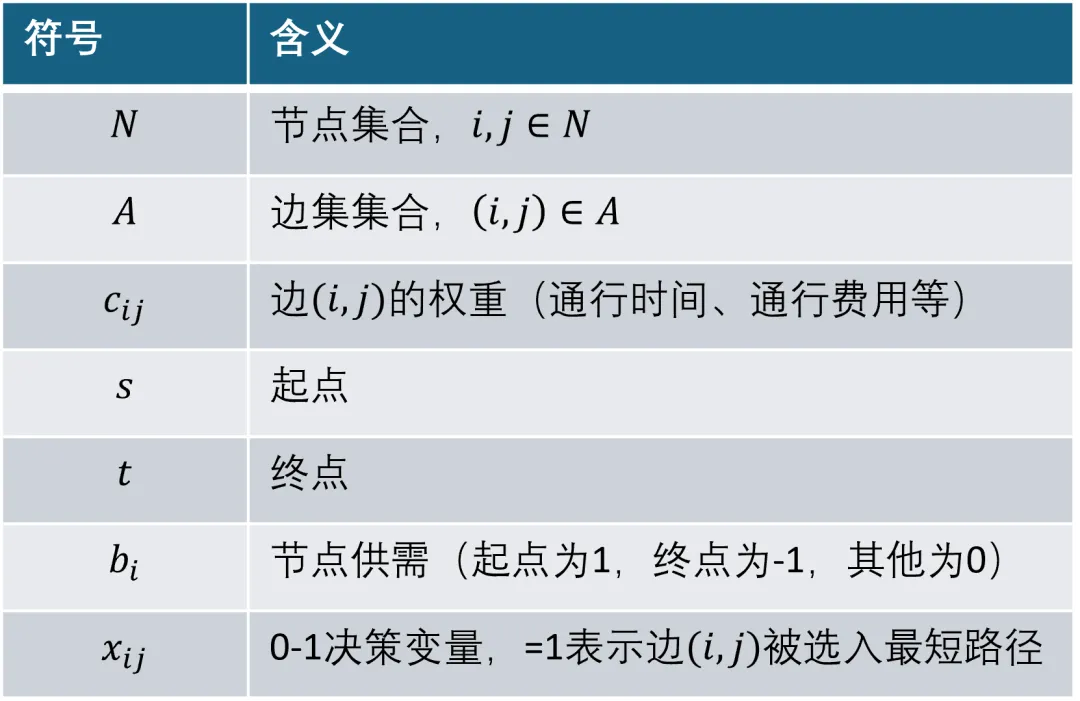
把路网抽象一下:
节点:家、若干路口/地标、公司
边:路口间的路段,带通行时间(分钟)
起点:家
终点:公司
目标:家到公司的总通行时间最小
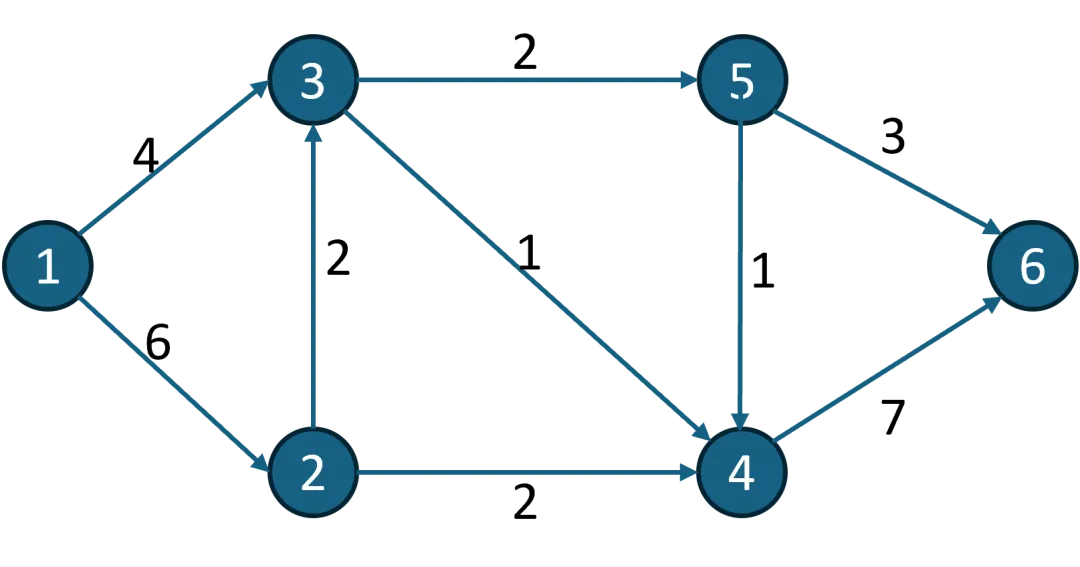
这就是一个最典型的最短路问题:在带权有向图上,求从起点到终点权值和最小的路径。
为了让模型落地且便于读者手算验证,我们构造一个小型路网。
Gurobi 是学术界最常用的商业求解器,学术免费、性能强劲。
from gurobipy import GRB,Model,quicksum# ============================================================#1. 定义案例数据# ============================================================N = [1, 2, 3, 4, 5, 6]A = [(1, 2),(1, 3),(2, 3),(2, 4),(3, 4),(3, 5),(4, 6),(5, 4),(5, 6)]C = {(1, 2): 6,(1, 3): 4,(2, 3): 2,(2, 4): 2,(3, 4): 1,(3, 5): 2,(4, 6): 7,(5, 4): 1,(5, 6): 3}s = 1t = 6b = {1: 1, 2: 0, 3: 0, 4: 0, 5: 0, 6: -1}# ============================================================# 2. 建模与求解# ============================================================def build_and_solve(N: list, A: list, C: dict,b: dict, s: int, t: int): # ---- 建模 ---- model = Model("ShortestPath_Gurobi") # 决策变量 x_{ij} in {0,1} x = model.addVars(A, vtype=GRB.BINARY, name="x") # 目标: min sum c_{ij} * x_{ij} model.setObjective( quicksum(C[i, j] * x[i, j] for (i, j) in A),GRB.MINIMIZE) # 约束: 流平衡 for i in N: out_expr = quicksum(x[i, j] for (ii, j) in A if ii == i) in_expr = quicksum(x[j, i] for (j, ii) in A if ii == i) model.addConstr(out_expr - in_expr == b[i], name=f"flow_balance_{i}") # ---- 求解 ---- model.optimize() # ---- 结果 ---- status = model.Status if model.Status == GRB.OPTIMAL: chosen = [(i, j) for (i, j) in A if x[i, j].X > 0.5] total = model.ObjVal path = reconstruct_path(chosen, s, t) return { "status": "OPTIMAL", "total_cost": total, "path": path, "chosen_edges": chosen, } return {"status": f"status={status}", "total_cost": None, "path": None, "chosen_edges": None}def reconstruct_path(chosen, s, t): """由选中的边集合按出度链还原有序路径。""" nxt = {i: j for (i, j) in chosen} path = [s] cur = s while cur != t: cur = nxt[cur] path.append(cur) return path# ============================================================# 3. 主流程# ============================================================def main(): res = build_and_solve(N, A, C,b, s, t) if res["status"] == "OPTIMAL": print(f"求解状态: OPTIMAL") print(f"目标值:{res['total_cost']}") print(f"选中边: {res['chosen_edges']}") print(f"最短路径: {res['path']}") else: print(f"求解状态: {res['status']} (无可行径路)")if __name__ == "__main__": main()
COPT(Cardinal Optimizer,杉数科技)是国产高性能商业求解器,对 MIP 求解性能突出。
from coptpy import COPT, Envr# ============================================================# 1. 定义案例数据# ============================================================N = [1, 2, 3, 4, 5, 6]A = [ (1, 2),(1, 3),(2, 3),(2, 4),(3, 4),(3, 5),(4, 6),(5, 4),(5, 6)]C = { (1, 2): 6, (1, 3): 4,(2, 3): 2,(2, 4): 2,(3, 4): 1,(3, 5): 2,(4, 6): 7,(5, 4): 1,(5, 6): 3}s = 1t = 6b = { 1: 1,2: 0, 3: 0, 4: 0,5: 0,6: -1}# ============================================================# 2. 建模与求解# ============================================================def build_and_solve(N: list, A: list, C: dict,b: dict, s: int, t: int): # ---- 建模 ---- model = Envr().createModel("ShortestPath_COPT") # 决策变量 x_{ij} in {0,1} x = model.addVars(A,vtype=COPT.BINARY, nameprefix="x") # 目标: min sum c_{ij} * x_{ij} model.setObjective(sum(C[i, j] * x[i, j] for (i, j) in A), COPT.MINIMIZE) # 约束: 流平衡 for i in N: out_expr = sum(x[i, j] for (ii, j) in A if ii == i) in_expr = sum(x[j, i] for (j, ii) in A if ii == i) model.addConstr(out_expr - in_expr == b[i], name=f"flow_balance_{i}") # ---- 求解 ---- model.solve() # ---- 结果 ---- status = model.status if status == COPT.OPTIMAL: chosen = [(i, j) for (i, j) in A if x[i, j].X > 0.5] total = float(model.getAttr(COPT.Attr.BestObj)) path = reconstruct_path(chosen, s, t) return {"status": "OPTIMAL", "total_cost": total, "path": path, "chosen_edges": chosen} return {"status": f"status={status}", "total_cost": None, "path": None, "chosen_edges": Nonedef reconstruct_path(chosen, s, t): """由选中的边集合按出度链还原有序路径。""" nxt = {i: j for (i, j) in chosen} path = [s] cur = s while cur != t: cur = nxt[cur] path.append(cur) return path# ============================================================#3. 主流程# ============================================================def main(): res = build_and_solve(N, A, C,b, s, t) if res["status"] == "OPTIMAL": print(f"求解状态: OPTIMAL") print(f"目标值:{res['total_cost']}") print(f"选中边: {res['chosen_edges']}") print(f"最短路径: {res['path']}") else: print(f"求解状态: {res['status']} (无可行径路)")if __name__ == "__main__": main()
SCIP 是开源求解器(Apache-2.0 协议),无需 license ,适合学习、原型验证和受限部署场景。
from pyscipopt import Model, quicksum# ============================================================# 1. 数据读取# ============================================================N = [ 1, 2, 3, 4, 5, 6]A = [ (1, 2),(1, 3), (2, 3), (2, 4),(3, 4),(3, 5),(4, 6),(5, 4),(5, 6)]C = { (1, 2): 6, (1, 3): 4, (2, 3): 2, (2, 4): 2, (3, 4): 1, (3, 5): 2, (4, 6): 7, (5, 4): 1, (5, 6): 3}s = 1t = 6b = { 1: 1, 2: 0, 3: 0, 4: 0, 5: 0, 6: -1}# ============================================================# 2. 建模与求解# ============================================================def build_and_solve(N: list, A: list, C: dict,b: dict, s: int, t: int): # ---- 建模 ---- model = Model("ShortestPath_SCIP") # 决策变量 x_{ij} in {0,1} x = {} for (i, j) in A: x[i, j] = model.addVar(lb=0, ub=1, vtype="BINARY", name=f"x_{i}_{j}") # 目标: min sum c_{ij} * x_{ij} model.setObjective(quicksum(C[i, j] * x[i, j] for (i, j) in A), "minimize") # 约束: 流平衡 for i in N: out_expr = quicksum(x[i, j] for (ii, j) in A if ii == i) in_expr = quicksum(x[j, i] for (j, ii) in A if ii == i) model.addCons(out_expr - in_expr == b[i], name=f"flow_balance_{i}") # ---- 求解 ---- model.optimize() # ---- 结果 ---- status = model.getStatus() if status == "optimal": chosen = [(i, j) for (i, j) in A if model.getVal(x[i, j]) > 0.5] total = model.getObjVal() path = reconstruct_path(chosen, s, t) return {"status": "OPTIMAL", "total_cost": total, "path": path, "chosen_edges": chosen} return {"status": f"status={status}", "total_cost": None, "path": None, "chosen_edges": None}def reconstruct_path(chosen, s, t): """由选中的边集合按出度链还原有序路径。""" nxt = {i: j for (i, j) in chosen} path = [s] cur = s while cur != t: cur = nxt[cur] path.append(cur) return path# ============================================================# 3. 主流程# ============================================================def main(): res = build_and_solve(N, A, C, b, s, t) if res["status"] == "OPTIMAL": print(f"求解状态: OPTIMAL") print(f"目标值:{res['total_cost']}") print(f"选中边: {res['chosen_edges']}") print(f"最短路径: {res['path']}") else: print(f"求解状态: {res['status']} (无可行径路)")if__name__ == "__main__": main()
参考资料:
[1] Ahuja, Ravindra K. et al. “Network Flows: Theory, Algorithms, and Applications.” (1993).