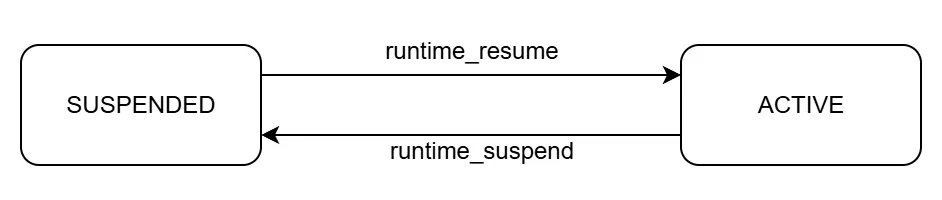
Runtime PM (运行时电源管理) 是 Linux 内核电源管理框架中非常高效且灵活的部分。Runtime PM 允许单个设备在系统运行过程中,根据其繁忙程度动态地进入低功耗状态,而不会干扰其他设备的正常工作。
Runtime PM 的基本逻辑是:当设备不再使用时,自动关掉它的电源或时钟;当有请求到来时,再即时唤醒它。
为了实现 Runtime PM,内核维护了一个针对每个设备的引用计数(Usage Count):
Runtime PM 将设备状态简化为以下四种,并在它们之间切换:
RPM_ACTIVE:设备处于正常工作状态。
RPM_SUSPENDING:设备正在执行进入低功耗模式的过程。
RPM_SUSPENDED:设备已关闭或处于低功耗模式。
RPM_RESUMING:设备正在从低功耗模式恢复到活跃状态。
struct dev_pm_ops { int (*prepare)(struct device *dev); void (*complete)(struct device *dev); int (*suspend)(struct device *dev); int (*resume)(struct device *dev); int (*freeze)(struct device *dev); int (*thaw)(struct device *dev); int (*poweroff)(struct device *dev); int (*restore)(struct device *dev); int (*suspend_late)(struct device *dev); int (*resume_early)(struct device *dev); int (*freeze_late)(struct device *dev); int (*thaw_early)(struct device *dev); int (*poweroff_late)(struct device *dev); int (*restore_early)(struct device *dev); int (*suspend_noirq)(struct device *dev); int (*resume_noirq)(struct device *dev); int (*freeze_noirq)(struct device *dev); int (*thaw_noirq)(struct device *dev); int (*poweroff_noirq)(struct device *dev); int (*restore_noirq)(struct device *dev); //运行时电源管理 int (*runtime_suspend)(struct device *dev); //设备空闲并满足延迟条件时调用 int (*runtime_resume)(struct device *dev); //设备被重新访问,需要恢复工作时调用 int (*runtime_idle)(struct device *dev); //当引用计数归零时,内核询问驱动:“现在是否方便进入低功耗?”(通常在此函数中决定是否启动延迟自动休眠)。};
设备电源管理操作函数集,包含系统级休眠,运行时电源管理,磁盘休眠等。在运行时电源管理中,我们主要关注 runtime_suspend, runtime_resume, runtime_idle 。
//使能设备的Runtime PM功能voidpm_runtime_enable(struct device *dev);//禁止设备的Runtime PM功能voidpm_runtime_disable(struct device *dev);//设置Runtime PM状态为"active"intpm_runtime_set_active(struct device *dev);//设置Runtime PM状态为"suspended"intpm_runtime_set_suspended(struct device *dev);//递增计数并同步唤醒设备。如果设备在睡觉,它会阻塞直到runtime_resume执行完毕。intpm_runtime_get_sync(struct device *dev);//它是pm_runtime_get_sync的安全包装版。如果唤醒失败,它内部会自动处理计数平衡,开发者无需手动清理。intpm_runtime_resume_and_get(struct device *dev);//递增计数,但异步触发唤醒。函数立即返回,不等待唤醒完成。intpm_runtime_get(struct device *dev);//计数减1。如果计数达到0,异步触发runtime_suspend。intpm_runtime_put(struct device *dev);//计数减1。如果计数达到0,触发runtime_suspend, 并同步等待执行完成intpm_runtime_put_sync(struct device *dev);//配合延迟机制使用。减1后不会立即休眠,而是等待设定的延迟时间。如果这段时间内没有新的get,再休眠。intpm_runtime_put_autosuspend(struct device *dev);//告知内核该设备支持延迟自动休眠voidpm_runtime_use_autosuspend(struct device *dev);//设置延迟时间(单位:毫秒)voidpm_runtime_set_autosuspend_delay(struct device *dev, int delay);//更新“最后一次忙碌”的时间戳。通常在put_autosuspend之前调用,确保延迟从当前时刻开始计算。voidpm_runtime_mark_last_busy(struct device *dev);//判断设备当前是否处于active状态boolpm_runtime_active(struct device *dev);//判断设备当前是否处于suspended状态boolpm_runtime_suspended(struct device *dev);//检查设备现在是否已经空闲,如果空闲的话可以考虑执行 Runtime Suspend。intpm_runtime_idle(struct device *dev);//引用计数减1,但不会触发设备进入idle状态检查。(仅仅只是减1)voidpm_runtime_put_noidle(struct device *dev);//仅当设备当前已经处于active状态,并且引用计数大于0时,才增加引用计数(usage count),否则什么也不做。intpm_runtime_get_if_in_use(struct device *dev);
#include<linux/module.h>#include<linux/kernel.h>#include<linux/fs.h>#include<linux/platform_device.h>#include<linux/pm_runtime.h>#include<linux/slab.h>struct my_device_data { void __iomem *regs; int usage_count;};/* 1. 实现运行时休眠回调:关闭硬件时钟/电源 */staticintmy_runtime_suspend(struct device *dev){ pr_info("Runtime PM: Device entering low power state...\n"); // 这里执行具体的硬件操作,例如: // clk_disable_unprepare(my_clk); // regulator_disable(my_reg); return 0;}/* 2. 实现运行时唤醒回调:开启硬件时钟/电源 */staticintmy_runtime_resume(struct device *dev){ pr_info("Runtime PM: Device waking up to active state...\n"); // 这里执行具体的硬件操作,例如: // clk_prepare_enable(my_clk); // regulator_enable(my_reg); return 0;}/* 3. 定义电源管理操作结构体 */static const struct dev_pm_ops my_pm_ops = { SET_RUNTIME_PM_OPS(my_runtime_suspend, my_runtime_resume, NULL)};/* 模拟硬件操作函数 */staticvoiddo_hardware_work(struct device *dev){ pr_info("Hardware: Doing some real work on registers...\n");}/* 模拟字符设备读操作 */staticssize_tmy_read(struct file *filp, char __user *buf, size_t count, loff_t *pos){ struct device *dev = filp->private_data; int ret; // 1. 尝试唤醒设备并增加引用计数 // 如果设备在休眠,这里会阻塞直到 my_runtime_resume 完成 ret = pm_runtime_resume_and_get(dev); if (ret < 0) { pr_err("Runtime PM: Failed to resume device\n"); return ret; } // 2. 设备已就绪,执行硬件操作 do_hardware_work(dev); // 3. 释放计数 // 设备不会立即休眠,而是进入 autosuspend 计时 pm_runtime_put_autosuspend(dev); return 0;}/* 驱动初始化 Probe */staticintmy_probe(struct platform_device *pdev){ struct device *dev = &pdev->dev; pr_info("Runtime PM Demo: Probing device\n"); // 1. 设置 Autosuspend 延迟时间(如 2000ms) pm_runtime_set_autosuspend_delay(dev, 2000); pm_runtime_use_autosuspend(dev); // 2. 初始化设备状态为 Active 并使能 pm_runtime_set_active(dev); pm_runtime_enable(dev); return 0;}/* 驱动卸载 Remove */staticintmy_remove(struct platform_device *pdev){ struct device *dev = &pdev->dev; // 禁止 Runtime PM,如果此时处于休眠则会执行 resume pm_runtime_disable(dev); pm_runtime_set_suspended(dev); return 0;}static struct platform_driver my_driver = { .probe = my_probe, .remove = my_remove, .driver = { .name = "my_pm_demo", .pm = &my_pm_ops, },};module_platform_driver(my_driver);MODULE_LICENSE("GPL");