《The Untethered Soul》第11章
"Pain, the Price of Freedom" 中
提取14个关键动词(verb),
然后串起来看其动作链条。
第11章“Pain, the Price of Freedom”的14个关键动词按顺序构成一条从痛苦到自由的完整动作链条:Observe → Stop fighting → Feel → Relax → Open → Release → Let go → Give room → Let pass through → Burn through → Purify → Transcend → Free → Awaken。
动作链条(The Chain of Action)
Phase 1: 停止抵抗(Stop the War)
Observe(觉察痛苦升起)→ Stop fighting(停止与它搏斗)→ Feel(直接感受那股阻力)
Phase 2: 身体与心的松动(The Unclenching)
Relax(放松肩膀和心)→ Open(打开心门)→ Release(释放紧抓的执念)→ Let go(彻底放手)
Phase 3: 让能量穿过(The Passage)
Give room(腾出空间)→ Let pass through(让痛苦像风一样穿过你)→ Burn through(让痛苦的能量烧穿内心的淤堵)
Phase 4: 蜕变与自由(The Transformation)
Purify(痛苦被净化)→ Transcend(超越痛苦的限制)→ Free(获得真正的自由)→ Awaken(灵魂觉醒)
辛格认为从 Relax(放松)开始的所有环节共同构成通向 Transcend 的路径,其中 Phase 2 的“Relax(放松)”是普通人最容易倒下的核心关卡,Phase 3 的“Let pass through(让它穿过)”是最难突破的关卡。
Phase 1 — Stop fighting(停止对抗)
辛格原文写道:“As you relax and feel the resistance, the heart will want to pull away, to close, to protect, and to defend itself. Keep relaxing.”
难度最高:Let pass through(让它穿过)
这是Phase 3的核心动作。辛格说:“If life does something that causes a disturbance inside of you, instead of pulling away, let it pass through you like the wind.”
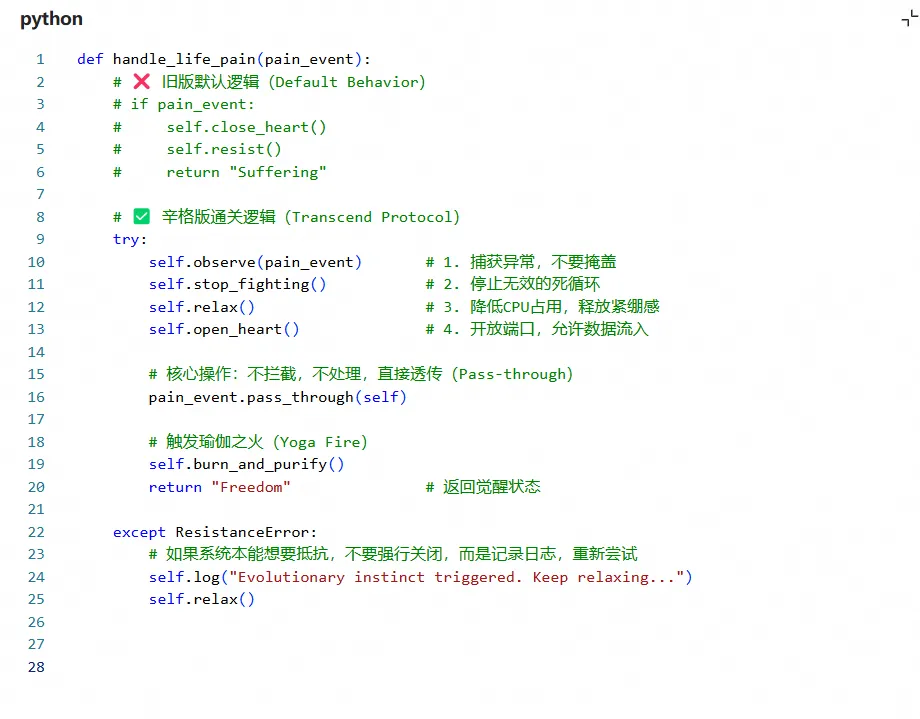
def handle_life_pain(pain_event):
2 # ❌ 旧版默认逻辑(Default Behavior)
3 # if pain_event:
4 # self.close_heart() 5 # self.resist() 6 # return "Suffering"
IF ACTIONS(CLOSE+RESIST=SUFFERING) *default setttings
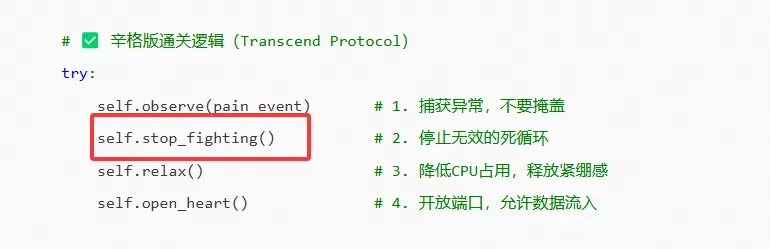
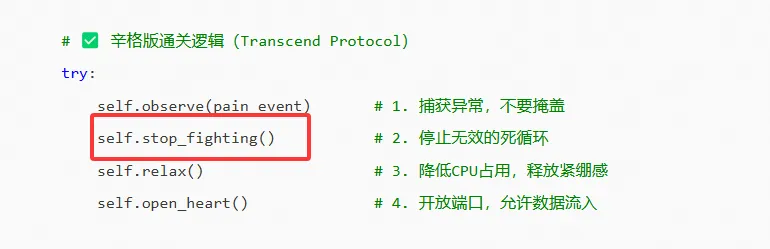
最核心的倒下点:PhaseStop fighting
辛格原文写道:“As you relax and feel the resistance, the heart will want to pull away, to close, to protect, and to defend itself. Keep relaxing.”
本能拦截:心(heart)的本能反应是“pull away, close, protect, defend”。进化本能(Kill or Resist)在此处自动启动,大脑尖叫着让你关门。
失败机制:绝大多数人在“Keep relaxing”这一步失败。因为放松意味着“不设防”,而大脑的默认程序(Default)是“必须设防”。
秘诀一:放弃“改变外界”,选择“改变内在的受力点”
难度最高:Let pass through(让它穿过)
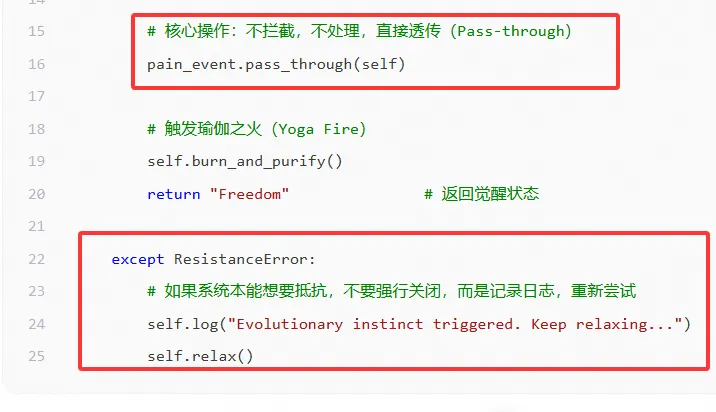
这是Phase 3的核心动作。辛格说:“If life does something that causes a disturbance inside of you, instead of pulling away, let it pass through you like the wind.”
密码核心:Let it pass through(让它穿过)
辛格的洞见:痛苦之所以致命,是因为我们把它当成了“我”的悲剧。通关密码是抽离(Detachment)。把心痛、恐惧、绝望,仅仅看作是一股“正在流经你身体的物理能量(Energy)”。
行动指南:像站在桥上看河水一样看着这股能量。不评判它,不挽留它,不驱赶它。你只是给它腾出空间(Give room),让它像风穿过空房间一样穿过你。风穿过房间,房间不会受伤。
难度次高:Burn through(燃烧穿过)
辛格写道:“You just relax, give it the space it needs to release and burn through you.”
密码核心:Burn through(燃烧穿过)与 Purify(净化)
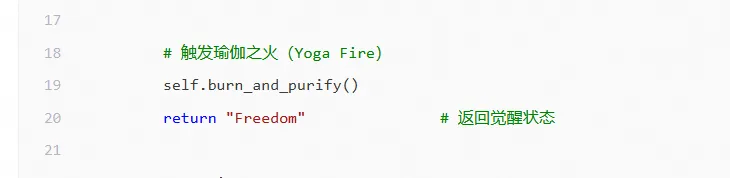
辛格的洞见:这是最颠覆的认知——痛苦不是来摧毁你的,它是来烧毁你内心那些阻碍你自由的旧枷锁的。辛格称之为“瑜伽之火(Yoga fire)”。
行动指南:当你愿意支付“痛苦”这个代价时,痛苦就转化成了觉醒的燃料。每一次你忍住不逃避、不封闭,这股火就会烧掉一层你内心的恐惧和执念。烧完之后,留下的就是纯粹的自由和热情。
给用户的“运维手册”(Actionable Takeaways)
程序员在交付这套系统时,会给你三条铁律:
Rule 1: 不要对抗异常(Don't fight the exception)报错(痛苦)出现时,不要疯狂点击“忽略”或“关闭”。你越点,后台积压的进程越多。正确做法是:Read the logs(读取日志),看着它,然后让它跑完。
Rule 2: 改变受力点(Change the handler)外界的事件(比如孩子不接电话)是只读变量(Read-only),你无法修改它。你唯一能改的,是处理这个变量的回调函数(Callback)。把 onPain() 从“焦虑”改成“Relax”。
Rule 3: 痛苦是清理缓存的脚本(Pain is a cleanup script)不要害怕系统报错。每一次报错,只要你保持 Open 状态,系统就会自动清理掉一块历史遗留的顽固数据(Past trauma)。清理的过程很痛,但清理完,系统就升级了。