当前位置:首页>Linux>深入理解Linux进程:从fork、exec到exit,一次看懂进程的完整生命周期

深入理解Linux进程:从fork、exec到exit,一次看懂进程的完整生命周期

  • 2026-02-07 01:09:00
深入理解Linux进程:从fork、exec到exit,一次看懂进程的完整生命周期

在Linux系统中,进程是资源分配和调度的基本单位,所有程序的运行本质上都是进程从创建、运行到消亡的生命周期过程。而Linux进程的完整生命周期,核心围绕fork(创建)、exec(程序替换)、wait(父进程等待)、exit(进程终止) 四个关键系统调用展开——fork实现进程的“复制”,exec完成程序的“替换”,wait保障父进程对子进程的“回收”,exit实现进程的“优雅终止”。

本文将从进程生命周期的核心原理出发,拆解每个关键阶段的底层逻辑,结合可运行的C语言代码示例,搭配实际生产场景的实践方案,让你彻底搞懂Linux进程从诞生到消亡的完整过程。

一、Linux进程的核心基础:先搞懂这3个关键概念

在深入生命周期之前,需先理清3个基础概念,这是理解后续操作的前提:

1. 进程ID(PID)与父/子进程

Linux中每个进程都有唯一的进程ID(PID,Positive Integer),由内核动态分配(默认从300开始,PID=0为空闲进程、PID=1为init/systemd进程,是所有进程的“祖先进程”)。
通过fork创建的新进程为子进程,原进程为父进程,子进程会继承父进程的PID(作为自身PPID,父进程ID),形成Linux的进程树结构(可通过pstree命令查看)。

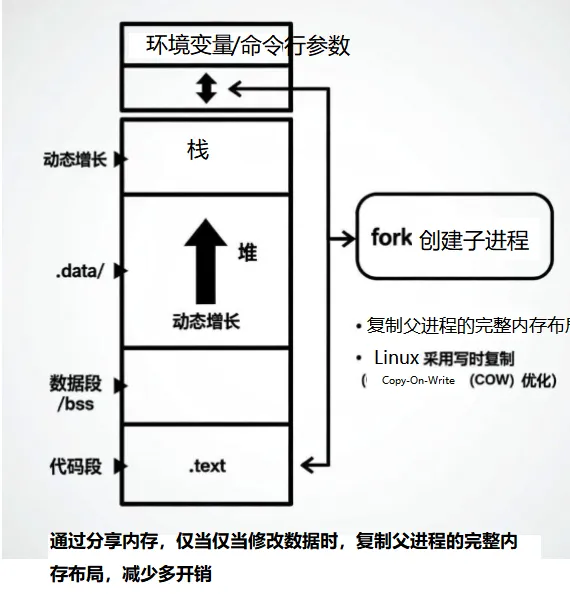
2. 进程的内存布局

每个进程拥有独立的内存空间(内核通过页表实现隔离),经典布局从低地址到高地址依次为:代码段(.text)、数据段(.data/.bss)、堆(heap)、栈(stack)、环境变量/命令行参数
fork创建子进程时,会复制父进程的内存布局(Linux实际采用写时复制(Copy-On-Write,COW) 优化:默认共享内存,仅当父/子进程修改数据时,才会真正复制对应内存页,减少内存开销)。

3. 系统调用与用户态/内核态

forkexecexitwait均为Linux系统调用——进程从用户态切换到内核态,请求内核完成进程管理的底层操作(如分配PID、修改进程表、释放资源等),操作完成后再切回用户态。
Linux系统调用可通过man 2 函数名查看详细文档(如man 2 fork),这是开发和排查问题的重要工具。

二、Linux进程完整生命周期:四大阶段+核心系统调用

Linux进程的生命周期可概括为4个核心阶段,串联起forkexecwaitexit四大关键系统调用,完整流程为:父进程创建(fork)→ 子进程程序替换(exec)→ 子进程运行并终止(exit)→ 父进程回收子进程(wait)
若父进程未及时回收终止的子进程,子进程会变成僵尸进程(占用PID资源,无法被重新分配);若父进程先于子进程终止,子进程会被init/systemd(PID=1) 收养,成为“孤儿进程”,最终由祖先进程回收。

阶段1:进程创建——fork(),实现“复制式创建”

1. fork的核心原理

fork()是Linux创建新进程的唯一方式(除了init进程),其核心特性是**“一次调用,两次返回”**:

  • 调用fork()时,内核会为子进程分配新的PID,复制父进程的进程表、文件描述符、内存页表(写时复制)等资源;
  • 父进程中,fork()返回子进程的PID(大于0的整数);
  • 子进程中,fork()返回0
  • 若创建失败(如系统PID耗尽、内存不足),fork()返回**-1**,并设置errno

2. fork的关键特性:写时复制(COW)

早期Linux中,fork会直接复制父进程的所有内存,效率极低。现代Linux采用写时复制优化:

  • fork后,父、子进程共享同一块物理内存,页表标记为“只读”;
  • 当任意一方(父/子)尝试修改内存数据时,内核会为修改的内存页创建副本,各自持有独立的可写副本;
  • 只读数据(如代码段)始终共享,直到进程执行exec替换程序。

3. 代码示例:基础fork创建子进程

#include<stdio.h>
#include<unistd.h>
#include<sys/types.h>
#include<errno.h>

intmain() {
// 定义变量存储fork返回值
pid_t pid;
// 全局变量,验证写时复制
int global_var = 10;

// 调用fork创建子进程
    pid = fork();

// fork失败处理
if (pid == -1) {
        perror("fork failed");  // 打印错误信息(结合errno
return-1;
    }

// 子进程:fork返回0
if (pid == 0) {
printf("【子进程】PID: %d, PPID: %d\n", getpid(), getppid());
        global_var += 5;  // 子进程修改全局变量
printf("【子进程】global_var: %d(修改后)\n", global_var);
// 子进程暂时不退出,等待父进程执行
        sleep(2);
    }

// 父进程:fork返回子进程PID>0
if (pid > 0) {
printf("【父进程】PID: %d, 子进程PID: %d\n", getpid(), pid);
printf("【父进程】global_var: %d(原始值)\n", global_var);
// 父进程等待子进程执行完成,避免子进程成为僵尸进程
        sleep(3);
    }

// 父、子进程都会执行这行代码(验证独立运行)
printf("PID: %d, 执行结束\n", getpid());
return0;
}

4. 编译运行与结果分析

编译(保存为fork_demo.c
gcc fork_demo.c -o fork_demo
运行
./fork_demo

运行结果

【父进程】PID: 1234, 子进程PID: 1235
【父进程】global_var: 10(原始值)
【子进程】PID: 1235, PPID: 1234
【子进程】global_var: 15(修改后)
PID: 1234, 执行结束
PID: 1235, 执行结束

关键结论

  1. 父、子进程是并发运行的(内核调度决定执行顺序);
  2. 子进程修改全局变量后,父进程的变量值不变——验证写时复制,修改触发内存副本创建,实现进程内存隔离;
  3. 父进程通过sleep(3)等待子进程,避免子进程先终止成为僵尸进程。

阶段2:程序替换——exec()系列,实现“进程的程序重载”

1. exec的核心问题:为什么需要exec?

fork创建的子进程,复制的是父进程的代码段和数据段——子进程默认执行和父进程相同的程序,而实际开发中,我们需要子进程执行新的程序(如父进程是Shell,子进程执行lsps等命令),这就需要exec系列函数完成程序替换

exec的核心作用:替换当前进程的代码段、数据段、堆、栈,保留进程的PID(进程本身未消亡,只是运行的程序被替换),实现“一个进程,运行不同程序”。

2. exec系列函数:6个函数,一个核心

Linux提供6个exec系列函数(统称execve的封装,execve是系统调用,其余为库函数),头文件均为<unistd.h>,核心区别是参数格式是否搜索PATH环境变量,常用的是execlpexecvp

函数名
格式
特点
execlp
int execlp(const char *file, const char *arg, ..., NULL);
搜索PATH,参数逐个传递,以NULL结尾
execvp
int execvp(const char *file, char *const argv[]);
搜索PATH,参数以数组传递
execl
int execl(const char *path, const char *arg, ..., NULL);
需指定程序绝对路径,参数逐个传递
execv
int execv(const char *path, char *const argv[]);
需指定程序绝对路径,参数以数组传递
execle
int execle(const char *path, const char *arg, ..., NULL, char *const envp[]);
自定义环境变量
execve
int execve(const char *path, char *const argv[], char *const envp[]);
系统调用,底层实现,其余函数最终调用它

关键特性

  • 若执行成功,不会返回(因为当前进程的代码段已被替换,原程序后续代码不再执行);
  • 若执行失败,返回**-1**(需在exec后添加错误处理,否则错误会被忽略);
  • 仅替换程序资源,进程的PID、PPID、文件描述符(未设置FD_CLOEXEC)等保持不变。

3. 代码示例:fork+exec组合,实现“父进程创建子进程执行新程序”

这是Linux最经典的进程使用模式(如Shell、Nginx、Docker等底层均基于此),示例实现:父进程创建子进程,子进程通过execlp执行ls -l /tmp命令,父进程等待子进程完成。

#include<stdio.h>
#include<unistd.h>
#include<sys/types.h>
#include<sys/wait.h>
#include<errno.h>

intmain() {
pid_t pid;
printf("【父进程】开始执行,PID: %d\n", getpid());

// 阶段1fork创建子进程
    pid = fork();
if (pid == -1) {
        perror("fork failed");
return-1;
    }

// 子进程:执行exec替换程序
if (pid == 0) {
printf("【子进程】创建成功,PID: %d,即将执行ls命令\n", getpid());
// 阶段2exec替换程序,执行ls -l /tmp,参数以NULL结尾
        execlp("ls""ls""-l""/tmp"NULL);
// 注意:若exec执行成功,以下代码不会执行;只有失败时才会走到这里
        perror("execlp failed");  // 打印exec失败原因(如命令不存在)
        _exit(1);  // 子进程执行失败,异常退出,退出码1
    }

// 父进程:等待子进程终止并回收资源
if (pid > 0) {
int status;
// 阶段3waitpid等待子进程,pid为子进程PIDstatus存储退出状态
pid_t ret = waitpid(pid, &status, 0);
if (ret == -1) {
            perror("waitpid failed");
return-1;
        }
// 解析子进程退出状态:正常退出/异常终止
if (WIFEXITED(status)) {
printf("【父进程】子进程(%d)正常终止,退出码: %d\n", pid, WEXITSTATUS(status));
        } elseif (WIFSIGNALED(status)) {
printf("【父进程】子进程(%d)被信号终止,信号号: %d\n", pid, WTERMSIG(status));
        }
    }

printf("【父进程】执行结束,PID: %d\n", getpid());
return0;
}

4. 编译运行与结果分析

编译(保存为fork_exec_demo.c
gcc fork_exec_demo.c -o fork_exec_demo
运行
./fork_exec_demo

运行结果

【父进程】开始执行,PID: 1236
【子进程】创建成功,PID: 1237,即将执行ls命令
总用量 0
-rw-r--r-- 1 root root 0 12月  5 10:00 test.txt
drwxr-xr-x 2 root root 40 12月  5 09:50 test_dir
【父进程】子进程(1237)正常终止,退出码: 0
【父进程】执行结束,PID: 1236

关键结论

  1. 子进程执行execlp后,成功替换为ls程序,输出/tmp目录内容,原子进程的C代码不再执行;
  2. exec
    执行成功无返回,因此perror("execlp failed")仅在命令不存在(如写为lss)时才会执行;
  3. 父进程通过waitpid精准等待指定子进程,避免僵尸进程,同时解析退出状态判断子进程是否正常终止。

阶段3:进程终止——exit()/_exit(),实现“优雅消亡”

进程终止分为正常终止异常终止exit()_exit()是正常终止的核心函数,也是进程生命周期的“收尾操作”。

1. 进程终止的两种方式

终止类型
触发场景
示例
正常终止
程序执行完毕、调用exit()/_exit()、main函数return
exit(0)
return 0
异常终止
被信号杀死(如kill -9)、访问非法内存、除零错误
kill -9 1237
、数组越界

2. exit()与_exit()的核心区别

两者均为进程终止函数,头文件分别为<stdlib.h>(exit)和<unistd.h>(_exit),核心区别是是否刷新标准输出缓冲区

  • _exit(int status)
    :系统调用,直接终止进程,释放内核资源(PID、内存、文件描述符),不刷新用户态缓冲区(如printf未换行的内容会丢失);
  • exit(int status)
    :库函数,封装了_exit,执行流程为:刷新缓冲区 → 执行atexit()注册的清理函数 → 调用_exit()终止进程。

status参数:进程退出码(0表示正常,非0表示异常),父进程可通过wait/waitpid的status参数解析该值(通过WEXITSTATUS(status))。

3. 代码示例:exit()与_exit()的缓冲区差异

#include<stdio.h>
#include<stdlib.h>
#include<unistd.h>

intmain() {
// 测试1:使用exit(),会刷新缓冲区,输出内容
printf("测试exit():缓冲区内容");  // 无换行,缓冲区未自动刷新
exit(0);  // 刷新缓冲区后终止,内容会输出
}

// 注释上面的代码,测试下面的代码
/*
int main() {
    // 测试2:使用_exit(),不刷新缓冲区,内容丢失
    printf("测试_exit():缓冲区内容");  // 无换行,缓冲区未自动刷新
    _exit(0);  // 直接终止,缓冲区内容不输出
}
*/

编译运行结果

  • 测试1(exit):输出测试exit():缓冲区内容
  • 测试2(_exit):无任何输出(缓冲区内容丢失)。

4. 核心建议

  • 应用层开发优先使用exit():确保printf、fwrite等的缓冲区内容被刷新,避免数据丢失;
  • 子进程exec执行失败时,优先使用**_exit()**:避免刷新父进程的缓冲区(fork后父、子进程共享缓冲区,exit()会导致重复刷新);
  • main函数的return n等价于exit(n):编译器会在main函数末尾自动插入exit(return值)

阶段4:资源回收——wait()/waitpid(),避免僵尸进程

1. 僵尸进程的产生原因

当子进程终止后,内核会保留该进程的部分资源(PID、退出状态、运行时间),等待父进程通过wait/waitpid读取,若父进程未及时调用wait/waitpid,子进程会变成僵尸进程(Zombie),状态为Z(可通过ps -ef | grep Z查看)。

僵尸进程的危害:Linux系统的PID数量有限(默认最大65535),大量僵尸进程会耗尽PID资源,导致系统无法创建新进程。

2. wait()与waitpid()的核心区别

两者均为父进程回收子进程的函数,头文件为<sys/wait.h>,核心区别是是否阻塞是否能精准回收指定子进程

函数名
格式
特点
wait
pid_t wait(int *status);
阻塞等待任意一个子进程终止,返回终止的子进程PID
waitpid
pid_t waitpid(pid_t pid, int *status, int options);
可指定等待单个/多个/任意子进程,支持非阻塞模式

关键参数说明

  • pid
    :指定等待的子进程PID,常用值:>0(等待指定PID的子进程)、-1(等待任意子进程,等价于wait)、0(等待同组的子进程);
  • options
    :等待模式,常用值:0(阻塞模式,等价于wait)、WNOHANG(非阻塞模式,若无子进程终止,立即返回0);
  • status
    :存储子进程的退出状态,可为NULL(不关心退出状态),通过以下宏解析:
    • WIFEXITED(status)
      :判断是否正常终止;
    • WEXITSTATUS(status)
      :获取正常终止的退出码;
    • WIFSIGNALED(status)
      :判断是否被信号终止;
    • WTERMSIG(status)
      :获取终止进程的信号号。

3. 代码示例:非阻塞waitpid,实现父进程同时管理多个子进程

实际开发中,父进程往往需要创建多个子进程,此时使用非阻塞waitpid(WNOHANG) 轮询回收子进程,避免阻塞导致父进程无法处理其他任务。

#include<stdio.h>
#include<unistd.h>
#include<sys/types.h>
#include<sys/wait.h>
#include<errno.h>

#define CHILD_NUM 3  // 创建3个子进程

intmain() {
pid_t pid[CHILD_NUM];
int i, status;

// 步骤1:创建3个子进程
for (i = 0; i < CHILD_NUM; i++) {
        pid[i] = fork();
if (pid[i] == -1) {
            perror("fork failed");
return-1;
        }
if (pid[i] == 0) {
// 子进程:执行不同的睡眠,模拟不同的运行时间
printf("【子进程%d】创建成功,PID: %d,即将睡眠%d\n", i+1, getpid(), i+1);
            sleep(i+1);  // 子进程1睡眠1秒,子进程2睡眠2秒,子进程3睡眠3
printf("【子进程%d】执行结束,PID: %d\n", i+1, getpid());
exit(i);  // 子进程正常退出,退出码为i0/1/2
        }
    }

// 步骤2:父进程非阻塞轮询,回收所有子进程
int recv_num = 0;  // 已回收的子进程数量
while (recv_num < CHILD_NUM) {
pid_t ret = waitpid(-1, &status, WNOHANG);  // 非阻塞等待任意子进程
if (ret > 0) {
// 成功回收子进程
            recv_num++;
if (WIFEXITED(status)) {
printf("【父进程】回收子进程PID: %d,退出码: %d\n", ret, WEXITSTATUS(status));
            }
        } elseif (ret == 0) {
// 暂无子进程终止,父进程执行其他任务(模拟)
printf("【父进程】暂无子进程终止,执行其他任务...\n");
            sleep(1);
        } else {
// waitpid失败(无更多子进程)
            perror("waitpid failed");
break;
        }
    }

printf("【父进程】所有子进程已回收,执行结束\n");
return0;
}

编译运行结果

【父进程】暂无子进程终止,执行其他任务...
【子进程1】创建成功,PID: 1238,即将睡眠1秒
【子进程2】创建成功,PID: 1239,即将睡眠2秒
【子进程3】创建成功,PID: 1240,即将睡眠3秒
【子进程1】执行结束,PID: 1238
【父进程】回收子进程PID: 1238,退出码: 0
【父进程】暂无子进程终止,执行其他任务...
【子进程2】执行结束,PID: 1239
【父进程】回收子进程PID: 1239,退出码: 1
【父进程】暂无子进程终止,执行其他任务...
【子进程3】执行结束,PID: 1240
【父进程】回收子进程PID: 1240,退出码: 2
【父进程】所有子进程已回收,执行结束

关键结论

  1. 非阻塞waitpid让父进程在等待子进程的同时,可执行其他任务,提升程序并发能力;
  2. 轮询回收确保所有子进程都被及时回收,彻底避免僵尸进程;
  3. 可通过pid[i]数组精准管理每个子进程,适合多子进程场景。

三、Linux进程生命周期的完整流程图

结合以上四个阶段,整理出Linux进程(fork+exec模式)的完整生命周期流程图,直观呈现每个阶段的核心操作和状态转换:

父进程(运行中)
    |
    v
调用fork() → 内核创建子进程(写时复制)→ 父进程返回子进程PID,子进程返回0
    |                          |
    |(父进程)                 |(子进程)
    |                          v
    |                  调用exec系列函数 → 替换程序代码段/数据段
    |                          |(执行新程序)
    |                          v
    |                  程序执行完毕 → 调用exit()/_exit() → 子进程终止(状态Z,僵尸进程)
    |                          |
    v                          |
调用wait/waitpid() ←←←←←←←←←←←←
    |(回收子进程资源,清除僵尸状态)
    v
父进程继续运行/终止

特殊场景分支

  1. 子进程未执行exec,直接exit → 父进程回收子进程(无程序替换,仅复制父进程代码执行);
  2. 父进程未调用wait/waitpid → 子进程终止后成为僵尸进程;
  3. 父进程先于子进程终止 → 子进程被init/systemd(PID=1)收养,成为孤儿进程,最终由祖先进程回收。

四、实际生产场景实践:基于fork+exec的经典应用

fork+exec是Linux系统编程的基础,几乎所有后台服务和命令行工具都基于此模式开发,以下是3个典型的生产场景实践,让你理解理论如何落地。

场景1:Shell终端的底层实现(最经典的fork+exec应用)

我们日常使用的Bash/Zsh终端,其核心工作原理就是fork+exec+wait

  1. Shell作为父进程,持续读取用户输入的命令(如ls -lps -ef);
  2. 接收到命令后,Shell调用fork创建子进程;
  3. 子进程调用exec系列函数(如execvp)替换为对应的命令程序;
  4. Shell调用waitpid阻塞等待子进程执行完毕,回收资源后,再次等待用户输入。

验证方式:在Shell中执行ps -ef | grep bash查看Shell的PID,执行ls -l时,通过pstree -p ShellPID可看到子进程的创建和销毁过程。

场景2:Nginx多进程模型(master-worker模式)

Nginx作为高性能Web服务器,采用master-worker多进程模型,底层基于fork实现,无需exec(因为worker进程需要执行和master相同的核心代码):

  1. Master进程(主进程):负责读取配置、监听端口、管理worker进程;
  2. Master进程通过fork创建多个Worker进程(数量通常等于CPU核心数,充分利用多核);
  3. Worker进程:共享master的监听端口,处理客户端请求,相互独立(一个worker异常不会影响其他worker);
  4. 当配置更新时,master进程通过信号通知worker进程优雅退出,再fork新的worker进程,实现无缝重启。

核心优势:基于fork的写时复制,master创建worker的开销极低;多进程隔离,提升服务稳定性。

场景3:批量任务处理(如数据清洗、日志分析)

在大数据处理场景中,常需要父进程创建多个子进程并行处理批量任务(如按文件分块清洗日志),核心流程:

  1. 父进程:读取任务列表(如100个日志文件),按CPU核心数拆分任务(如8核心拆分为8个任务块);
  2. 父进程fork创建8个子进程,每个子进程分配一个任务块;
  3. 子进程调用exec执行数据清洗程序(如Python脚本、C程序),处理对应任务块;
  4. 父进程通过非阻塞waitpid轮询回收子进程,统计任务执行结果(成功/失败);
  5. 所有子进程处理完毕后,父进程汇总结果,生成报告。

核心优势:并行处理提升任务效率,子进程独立执行,单个任务失败不影响整体流程。

五、常见问题与避坑指南

在基于fork+exec开发Linux程序时,容易遇到以下问题,提前规避可大幅提升开发效率:

1. 僵尸进程的彻底解决方法

除了父进程调用wait/waitpid,还有两种经典方案解决僵尸进程:

  • 方案1
    :父进程注册SIGCHLD信号处理函数,当子进程终止时,内核会向父进程发送SIGCHLD信号,在信号处理函数中调用waitpid回收子进程;
  • 方案2
    :父进程fork两次,创建“孙子进程”执行任务,父进程立即回收子进程,孙子进程成为孤儿进程,由init/systemd回收(适合无需父进程管理的后台任务)。

2. exec执行失败的常见原因

exec返回-1的常见场景,按排查优先级排序:

  1. 程序名/路径错误(如execlp("lss", ...),命令不存在);
  2. 程序无执行权限(如chmod -x test.sh,需执行chmod +x test.sh);
  3. 参数格式错误(如未以NULL结尾,execlp("ls", "ls", "-l", /tmp),缺少NULL);
  4. 系统资源不足(如内存不足、文件描述符耗尽)。

3. fork创建子进程的注意事项

  1. fork后,父、子进程的文件描述符是复制关系(指向同一个文件表项),若需独立操作文件,需在fork后关闭不需要的文件描述符,或设置FD_CLOEXEC(exec时关闭文件描述符);
  2. fork后,父、子进程的信号掩码、环境变量等会继承,需根据需求修改;
  3. 避免在多线程程序中随意fork(fork后仅复制当前线程,其他线程会终止,容易导致锁资源泄漏)。

六、总结

Linux进程的完整生命周期,本质是内核对进程资源的分配、管理和释放过程,而fork、exec、wait、exit四大系统调用,串联起了进程从创建到消亡的全部核心操作:

  1. fork
    :实现进程的“复制式创建”,基于写时复制优化,最小化内存开销,是所有新进程的诞生方式;
  2. exec
    :实现进程的“程序替换”,保留PID,替换运行的程序,是Linux实现程序调度的核心;
  3. wait/waitpid
    :实现父进程对子女进程的“资源回收”,避免僵尸进程,是进程生命周期的“收尾保障”;
  4. exit/_exit
    :实现进程的“优雅终止”,释放资源,传递退出状态,是进程生命周期的“最后一步”。

fork+exec的组合,是Linux系统“一切皆进程”的底层支撑,从简单的Shell命令执行,到高性能的Nginx多进程模型,再到批量的大数据处理,都基于这一核心模式。理解了进程的完整生命周期,不仅能让你轻松编写Linux系统程序,更能为后续学习进程通信、进程调度、多线程开发打下坚实的基础。

最后一个小建议:本文的所有代码示例均可直接编译运行,建议你在Linux虚拟机/服务器中亲手实践,通过修改参数(如fork的子进程数量、exec的命令)、模拟异常(如kill子进程、让exec执行失败),直观感受进程的状态变化,这是理解Linux进程最有效的方式。

最新文章

随机文章

基本 文件 流程 错误 SQL 调试
  1. 请求信息 : 2026-02-07 12:13:30 HTTP/2.0 GET : https://f.mffb.com.cn/a/470237.html
  2. 运行时间 : 0.130286s [ 吞吐率:7.68req/s ] 内存消耗:4,561.02kb 文件加载:140
  3. 缓存信息 : 0 reads,0 writes
  4. 会话信息 : SESSION_ID=a4d8b0396bceb31177e3b4cf9998a3ea
  1. /yingpanguazai/ssd/ssd1/www/f.mffb.com.cn/public/index.php ( 0.79 KB )
  2. /yingpanguazai/ssd/ssd1/www/f.mffb.com.cn/vendor/autoload.php ( 0.17 KB )
  3. /yingpanguazai/ssd/ssd1/www/f.mffb.com.cn/vendor/composer/autoload_real.php ( 2.49 KB )
  4. /yingpanguazai/ssd/ssd1/www/f.mffb.com.cn/vendor/composer/platform_check.php ( 0.90 KB )
  5. /yingpanguazai/ssd/ssd1/www/f.mffb.com.cn/vendor/composer/ClassLoader.php ( 14.03 KB )
  6. /yingpanguazai/ssd/ssd1/www/f.mffb.com.cn/vendor/composer/autoload_static.php ( 4.90 KB )
  7. /yingpanguazai/ssd/ssd1/www/f.mffb.com.cn/vendor/topthink/think-helper/src/helper.php ( 8.34 KB )
  8. /yingpanguazai/ssd/ssd1/www/f.mffb.com.cn/vendor/topthink/think-validate/src/helper.php ( 2.19 KB )
  9. /yingpanguazai/ssd/ssd1/www/f.mffb.com.cn/vendor/topthink/think-orm/src/helper.php ( 1.47 KB )
  10. /yingpanguazai/ssd/ssd1/www/f.mffb.com.cn/vendor/topthink/think-orm/stubs/load_stubs.php ( 0.16 KB )
  11. /yingpanguazai/ssd/ssd1/www/f.mffb.com.cn/vendor/topthink/framework/src/think/Exception.php ( 1.69 KB )
  12. /yingpanguazai/ssd/ssd1/www/f.mffb.com.cn/vendor/topthink/think-container/src/Facade.php ( 2.71 KB )
  13. /yingpanguazai/ssd/ssd1/www/f.mffb.com.cn/vendor/symfony/deprecation-contracts/function.php ( 0.99 KB )
  14. /yingpanguazai/ssd/ssd1/www/f.mffb.com.cn/vendor/symfony/polyfill-mbstring/bootstrap.php ( 8.26 KB )
  15. /yingpanguazai/ssd/ssd1/www/f.mffb.com.cn/vendor/symfony/polyfill-mbstring/bootstrap80.php ( 9.78 KB )
  16. /yingpanguazai/ssd/ssd1/www/f.mffb.com.cn/vendor/symfony/var-dumper/Resources/functions/dump.php ( 1.49 KB )
  17. /yingpanguazai/ssd/ssd1/www/f.mffb.com.cn/vendor/topthink/think-dumper/src/helper.php ( 0.18 KB )
  18. /yingpanguazai/ssd/ssd1/www/f.mffb.com.cn/vendor/symfony/var-dumper/VarDumper.php ( 4.30 KB )
  19. /yingpanguazai/ssd/ssd1/www/f.mffb.com.cn/vendor/topthink/framework/src/think/App.php ( 15.30 KB )
  20. /yingpanguazai/ssd/ssd1/www/f.mffb.com.cn/vendor/topthink/think-container/src/Container.php ( 15.76 KB )
  21. /yingpanguazai/ssd/ssd1/www/f.mffb.com.cn/vendor/psr/container/src/ContainerInterface.php ( 1.02 KB )
  22. /yingpanguazai/ssd/ssd1/www/f.mffb.com.cn/app/provider.php ( 0.19 KB )
  23. /yingpanguazai/ssd/ssd1/www/f.mffb.com.cn/vendor/topthink/framework/src/think/Http.php ( 6.04 KB )
  24. /yingpanguazai/ssd/ssd1/www/f.mffb.com.cn/vendor/topthink/think-helper/src/helper/Str.php ( 7.29 KB )
  25. /yingpanguazai/ssd/ssd1/www/f.mffb.com.cn/vendor/topthink/framework/src/think/Env.php ( 4.68 KB )
  26. /yingpanguazai/ssd/ssd1/www/f.mffb.com.cn/app/common.php ( 0.03 KB )
  27. /yingpanguazai/ssd/ssd1/www/f.mffb.com.cn/vendor/topthink/framework/src/helper.php ( 18.78 KB )
  28. /yingpanguazai/ssd/ssd1/www/f.mffb.com.cn/vendor/topthink/framework/src/think/Config.php ( 5.54 KB )
  29. /yingpanguazai/ssd/ssd1/www/f.mffb.com.cn/config/app.php ( 0.95 KB )
  30. /yingpanguazai/ssd/ssd1/www/f.mffb.com.cn/config/cache.php ( 0.78 KB )
  31. /yingpanguazai/ssd/ssd1/www/f.mffb.com.cn/config/console.php ( 0.23 KB )
  32. /yingpanguazai/ssd/ssd1/www/f.mffb.com.cn/config/cookie.php ( 0.56 KB )
  33. /yingpanguazai/ssd/ssd1/www/f.mffb.com.cn/config/database.php ( 2.48 KB )
  34. /yingpanguazai/ssd/ssd1/www/f.mffb.com.cn/vendor/topthink/framework/src/think/facade/Env.php ( 1.67 KB )
  35. /yingpanguazai/ssd/ssd1/www/f.mffb.com.cn/config/filesystem.php ( 0.61 KB )
  36. /yingpanguazai/ssd/ssd1/www/f.mffb.com.cn/config/lang.php ( 0.91 KB )
  37. /yingpanguazai/ssd/ssd1/www/f.mffb.com.cn/config/log.php ( 1.35 KB )
  38. /yingpanguazai/ssd/ssd1/www/f.mffb.com.cn/config/middleware.php ( 0.19 KB )
  39. /yingpanguazai/ssd/ssd1/www/f.mffb.com.cn/config/route.php ( 1.89 KB )
  40. /yingpanguazai/ssd/ssd1/www/f.mffb.com.cn/config/session.php ( 0.57 KB )
  41. /yingpanguazai/ssd/ssd1/www/f.mffb.com.cn/config/trace.php ( 0.34 KB )
  42. /yingpanguazai/ssd/ssd1/www/f.mffb.com.cn/config/view.php ( 0.82 KB )
  43. /yingpanguazai/ssd/ssd1/www/f.mffb.com.cn/app/event.php ( 0.25 KB )
  44. /yingpanguazai/ssd/ssd1/www/f.mffb.com.cn/vendor/topthink/framework/src/think/Event.php ( 7.67 KB )
  45. /yingpanguazai/ssd/ssd1/www/f.mffb.com.cn/app/service.php ( 0.13 KB )
  46. /yingpanguazai/ssd/ssd1/www/f.mffb.com.cn/app/AppService.php ( 0.26 KB )
  47. /yingpanguazai/ssd/ssd1/www/f.mffb.com.cn/vendor/topthink/framework/src/think/Service.php ( 1.64 KB )
  48. /yingpanguazai/ssd/ssd1/www/f.mffb.com.cn/vendor/topthink/framework/src/think/Lang.php ( 7.35 KB )
  49. /yingpanguazai/ssd/ssd1/www/f.mffb.com.cn/vendor/topthink/framework/src/lang/zh-cn.php ( 13.70 KB )
  50. /yingpanguazai/ssd/ssd1/www/f.mffb.com.cn/vendor/topthink/framework/src/think/initializer/Error.php ( 3.31 KB )
  51. /yingpanguazai/ssd/ssd1/www/f.mffb.com.cn/vendor/topthink/framework/src/think/initializer/RegisterService.php ( 1.33 KB )
  52. /yingpanguazai/ssd/ssd1/www/f.mffb.com.cn/vendor/services.php ( 0.14 KB )
  53. /yingpanguazai/ssd/ssd1/www/f.mffb.com.cn/vendor/topthink/framework/src/think/service/PaginatorService.php ( 1.52 KB )
  54. /yingpanguazai/ssd/ssd1/www/f.mffb.com.cn/vendor/topthink/framework/src/think/service/ValidateService.php ( 0.99 KB )
  55. /yingpanguazai/ssd/ssd1/www/f.mffb.com.cn/vendor/topthink/framework/src/think/service/ModelService.php ( 2.04 KB )
  56. /yingpanguazai/ssd/ssd1/www/f.mffb.com.cn/vendor/topthink/think-trace/src/Service.php ( 0.77 KB )
  57. /yingpanguazai/ssd/ssd1/www/f.mffb.com.cn/vendor/topthink/framework/src/think/Middleware.php ( 6.72 KB )
  58. /yingpanguazai/ssd/ssd1/www/f.mffb.com.cn/vendor/topthink/framework/src/think/initializer/BootService.php ( 0.77 KB )
  59. /yingpanguazai/ssd/ssd1/www/f.mffb.com.cn/vendor/topthink/think-orm/src/Paginator.php ( 11.86 KB )
  60. /yingpanguazai/ssd/ssd1/www/f.mffb.com.cn/vendor/topthink/think-validate/src/Validate.php ( 63.20 KB )
  61. /yingpanguazai/ssd/ssd1/www/f.mffb.com.cn/vendor/topthink/think-orm/src/Model.php ( 23.55 KB )
  62. /yingpanguazai/ssd/ssd1/www/f.mffb.com.cn/vendor/topthink/think-orm/src/model/concern/Attribute.php ( 21.05 KB )
  63. /yingpanguazai/ssd/ssd1/www/f.mffb.com.cn/vendor/topthink/think-orm/src/model/concern/AutoWriteData.php ( 4.21 KB )
  64. /yingpanguazai/ssd/ssd1/www/f.mffb.com.cn/vendor/topthink/think-orm/src/model/concern/Conversion.php ( 6.44 KB )
  65. /yingpanguazai/ssd/ssd1/www/f.mffb.com.cn/vendor/topthink/think-orm/src/model/concern/DbConnect.php ( 5.16 KB )
  66. /yingpanguazai/ssd/ssd1/www/f.mffb.com.cn/vendor/topthink/think-orm/src/model/concern/ModelEvent.php ( 2.33 KB )
  67. /yingpanguazai/ssd/ssd1/www/f.mffb.com.cn/vendor/topthink/think-orm/src/model/concern/RelationShip.php ( 28.29 KB )
  68. /yingpanguazai/ssd/ssd1/www/f.mffb.com.cn/vendor/topthink/think-helper/src/contract/Arrayable.php ( 0.09 KB )
  69. /yingpanguazai/ssd/ssd1/www/f.mffb.com.cn/vendor/topthink/think-helper/src/contract/Jsonable.php ( 0.13 KB )
  70. /yingpanguazai/ssd/ssd1/www/f.mffb.com.cn/vendor/topthink/think-orm/src/model/contract/Modelable.php ( 0.09 KB )
  71. /yingpanguazai/ssd/ssd1/www/f.mffb.com.cn/vendor/topthink/framework/src/think/Db.php ( 2.88 KB )
  72. /yingpanguazai/ssd/ssd1/www/f.mffb.com.cn/vendor/topthink/think-orm/src/DbManager.php ( 8.52 KB )
  73. /yingpanguazai/ssd/ssd1/www/f.mffb.com.cn/vendor/topthink/framework/src/think/Log.php ( 6.28 KB )
  74. /yingpanguazai/ssd/ssd1/www/f.mffb.com.cn/vendor/topthink/framework/src/think/Manager.php ( 3.92 KB )
  75. /yingpanguazai/ssd/ssd1/www/f.mffb.com.cn/vendor/psr/log/src/LoggerTrait.php ( 2.69 KB )
  76. /yingpanguazai/ssd/ssd1/www/f.mffb.com.cn/vendor/psr/log/src/LoggerInterface.php ( 2.71 KB )
  77. /yingpanguazai/ssd/ssd1/www/f.mffb.com.cn/vendor/topthink/framework/src/think/Cache.php ( 4.92 KB )
  78. /yingpanguazai/ssd/ssd1/www/f.mffb.com.cn/vendor/psr/simple-cache/src/CacheInterface.php ( 4.71 KB )
  79. /yingpanguazai/ssd/ssd1/www/f.mffb.com.cn/vendor/topthink/think-helper/src/helper/Arr.php ( 16.63 KB )
  80. /yingpanguazai/ssd/ssd1/www/f.mffb.com.cn/vendor/topthink/framework/src/think/cache/driver/File.php ( 7.84 KB )
  81. /yingpanguazai/ssd/ssd1/www/f.mffb.com.cn/vendor/topthink/framework/src/think/cache/Driver.php ( 9.03 KB )
  82. /yingpanguazai/ssd/ssd1/www/f.mffb.com.cn/vendor/topthink/framework/src/think/contract/CacheHandlerInterface.php ( 1.99 KB )
  83. /yingpanguazai/ssd/ssd1/www/f.mffb.com.cn/app/Request.php ( 0.09 KB )
  84. /yingpanguazai/ssd/ssd1/www/f.mffb.com.cn/vendor/topthink/framework/src/think/Request.php ( 55.78 KB )
  85. /yingpanguazai/ssd/ssd1/www/f.mffb.com.cn/app/middleware.php ( 0.25 KB )
  86. /yingpanguazai/ssd/ssd1/www/f.mffb.com.cn/vendor/topthink/framework/src/think/Pipeline.php ( 2.61 KB )
  87. /yingpanguazai/ssd/ssd1/www/f.mffb.com.cn/vendor/topthink/think-trace/src/TraceDebug.php ( 3.40 KB )
  88. /yingpanguazai/ssd/ssd1/www/f.mffb.com.cn/vendor/topthink/framework/src/think/middleware/SessionInit.php ( 1.94 KB )
  89. /yingpanguazai/ssd/ssd1/www/f.mffb.com.cn/vendor/topthink/framework/src/think/Session.php ( 1.80 KB )
  90. /yingpanguazai/ssd/ssd1/www/f.mffb.com.cn/vendor/topthink/framework/src/think/session/driver/File.php ( 6.27 KB )
  91. /yingpanguazai/ssd/ssd1/www/f.mffb.com.cn/vendor/topthink/framework/src/think/contract/SessionHandlerInterface.php ( 0.87 KB )
  92. /yingpanguazai/ssd/ssd1/www/f.mffb.com.cn/vendor/topthink/framework/src/think/session/Store.php ( 7.12 KB )
  93. /yingpanguazai/ssd/ssd1/www/f.mffb.com.cn/vendor/topthink/framework/src/think/Route.php ( 23.73 KB )
  94. /yingpanguazai/ssd/ssd1/www/f.mffb.com.cn/vendor/topthink/framework/src/think/route/RuleName.php ( 5.75 KB )
  95. /yingpanguazai/ssd/ssd1/www/f.mffb.com.cn/vendor/topthink/framework/src/think/route/Domain.php ( 2.53 KB )
  96. /yingpanguazai/ssd/ssd1/www/f.mffb.com.cn/vendor/topthink/framework/src/think/route/RuleGroup.php ( 22.43 KB )
  97. /yingpanguazai/ssd/ssd1/www/f.mffb.com.cn/vendor/topthink/framework/src/think/route/Rule.php ( 26.95 KB )
  98. /yingpanguazai/ssd/ssd1/www/f.mffb.com.cn/vendor/topthink/framework/src/think/route/RuleItem.php ( 9.78 KB )
  99. /yingpanguazai/ssd/ssd1/www/f.mffb.com.cn/route/app.php ( 1.72 KB )
  100. /yingpanguazai/ssd/ssd1/www/f.mffb.com.cn/vendor/topthink/framework/src/think/facade/Route.php ( 4.70 KB )
  101. /yingpanguazai/ssd/ssd1/www/f.mffb.com.cn/vendor/topthink/framework/src/think/route/dispatch/Controller.php ( 4.74 KB )
  102. /yingpanguazai/ssd/ssd1/www/f.mffb.com.cn/vendor/topthink/framework/src/think/route/Dispatch.php ( 10.44 KB )
  103. /yingpanguazai/ssd/ssd1/www/f.mffb.com.cn/app/controller/Index.php ( 4.81 KB )
  104. /yingpanguazai/ssd/ssd1/www/f.mffb.com.cn/app/BaseController.php ( 2.05 KB )
  105. /yingpanguazai/ssd/ssd1/www/f.mffb.com.cn/vendor/topthink/think-orm/src/facade/Db.php ( 0.93 KB )
  106. /yingpanguazai/ssd/ssd1/www/f.mffb.com.cn/vendor/topthink/think-orm/src/db/connector/Mysql.php ( 5.44 KB )
  107. /yingpanguazai/ssd/ssd1/www/f.mffb.com.cn/vendor/topthink/think-orm/src/db/PDOConnection.php ( 52.47 KB )
  108. /yingpanguazai/ssd/ssd1/www/f.mffb.com.cn/vendor/topthink/think-orm/src/db/Connection.php ( 8.39 KB )
  109. /yingpanguazai/ssd/ssd1/www/f.mffb.com.cn/vendor/topthink/think-orm/src/db/ConnectionInterface.php ( 4.57 KB )
  110. /yingpanguazai/ssd/ssd1/www/f.mffb.com.cn/vendor/topthink/think-orm/src/db/builder/Mysql.php ( 16.58 KB )
  111. /yingpanguazai/ssd/ssd1/www/f.mffb.com.cn/vendor/topthink/think-orm/src/db/Builder.php ( 24.06 KB )
  112. /yingpanguazai/ssd/ssd1/www/f.mffb.com.cn/vendor/topthink/think-orm/src/db/BaseBuilder.php ( 27.50 KB )
  113. /yingpanguazai/ssd/ssd1/www/f.mffb.com.cn/vendor/topthink/think-orm/src/db/Query.php ( 15.71 KB )
  114. /yingpanguazai/ssd/ssd1/www/f.mffb.com.cn/vendor/topthink/think-orm/src/db/BaseQuery.php ( 45.13 KB )
  115. /yingpanguazai/ssd/ssd1/www/f.mffb.com.cn/vendor/topthink/think-orm/src/db/concern/TimeFieldQuery.php ( 7.43 KB )
  116. /yingpanguazai/ssd/ssd1/www/f.mffb.com.cn/vendor/topthink/think-orm/src/db/concern/AggregateQuery.php ( 3.26 KB )
  117. /yingpanguazai/ssd/ssd1/www/f.mffb.com.cn/vendor/topthink/think-orm/src/db/concern/ModelRelationQuery.php ( 20.07 KB )
  118. /yingpanguazai/ssd/ssd1/www/f.mffb.com.cn/vendor/topthink/think-orm/src/db/concern/ParamsBind.php ( 3.66 KB )
  119. /yingpanguazai/ssd/ssd1/www/f.mffb.com.cn/vendor/topthink/think-orm/src/db/concern/ResultOperation.php ( 7.01 KB )
  120. /yingpanguazai/ssd/ssd1/www/f.mffb.com.cn/vendor/topthink/think-orm/src/db/concern/WhereQuery.php ( 19.37 KB )
  121. /yingpanguazai/ssd/ssd1/www/f.mffb.com.cn/vendor/topthink/think-orm/src/db/concern/JoinAndViewQuery.php ( 7.11 KB )
  122. /yingpanguazai/ssd/ssd1/www/f.mffb.com.cn/vendor/topthink/think-orm/src/db/concern/TableFieldInfo.php ( 2.63 KB )
  123. /yingpanguazai/ssd/ssd1/www/f.mffb.com.cn/vendor/topthink/think-orm/src/db/concern/Transaction.php ( 2.77 KB )
  124. /yingpanguazai/ssd/ssd1/www/f.mffb.com.cn/vendor/topthink/framework/src/think/log/driver/File.php ( 5.96 KB )
  125. /yingpanguazai/ssd/ssd1/www/f.mffb.com.cn/vendor/topthink/framework/src/think/contract/LogHandlerInterface.php ( 0.86 KB )
  126. /yingpanguazai/ssd/ssd1/www/f.mffb.com.cn/vendor/topthink/framework/src/think/log/Channel.php ( 3.89 KB )
  127. /yingpanguazai/ssd/ssd1/www/f.mffb.com.cn/vendor/topthink/framework/src/think/event/LogRecord.php ( 1.02 KB )
  128. /yingpanguazai/ssd/ssd1/www/f.mffb.com.cn/vendor/topthink/think-helper/src/Collection.php ( 16.47 KB )
  129. /yingpanguazai/ssd/ssd1/www/f.mffb.com.cn/vendor/topthink/framework/src/think/facade/View.php ( 1.70 KB )
  130. /yingpanguazai/ssd/ssd1/www/f.mffb.com.cn/vendor/topthink/framework/src/think/View.php ( 4.39 KB )
  131. /yingpanguazai/ssd/ssd1/www/f.mffb.com.cn/vendor/topthink/framework/src/think/Response.php ( 8.81 KB )
  132. /yingpanguazai/ssd/ssd1/www/f.mffb.com.cn/vendor/topthink/framework/src/think/response/View.php ( 3.29 KB )
  133. /yingpanguazai/ssd/ssd1/www/f.mffb.com.cn/vendor/topthink/framework/src/think/Cookie.php ( 6.06 KB )
  134. /yingpanguazai/ssd/ssd1/www/f.mffb.com.cn/vendor/topthink/think-view/src/Think.php ( 8.38 KB )
  135. /yingpanguazai/ssd/ssd1/www/f.mffb.com.cn/vendor/topthink/framework/src/think/contract/TemplateHandlerInterface.php ( 1.60 KB )
  136. /yingpanguazai/ssd/ssd1/www/f.mffb.com.cn/vendor/topthink/think-template/src/Template.php ( 46.61 KB )
  137. /yingpanguazai/ssd/ssd1/www/f.mffb.com.cn/vendor/topthink/think-template/src/template/driver/File.php ( 2.41 KB )
  138. /yingpanguazai/ssd/ssd1/www/f.mffb.com.cn/vendor/topthink/think-template/src/template/contract/DriverInterface.php ( 0.86 KB )
  139. /yingpanguazai/ssd/ssd1/www/f.mffb.com.cn/runtime/temp/067d451b9a0c665040f3f1bdd3293d68.php ( 11.98 KB )
  140. /yingpanguazai/ssd/ssd1/www/f.mffb.com.cn/vendor/topthink/think-trace/src/Html.php ( 4.42 KB )
  1. CONNECT:[ UseTime:0.000946s ] mysql:host=127.0.0.1;port=3306;dbname=f_mffb;charset=utf8mb4
  2. SHOW FULL COLUMNS FROM `fenlei` [ RunTime:0.001589s ]
  3. SELECT * FROM `fenlei` WHERE `fid` = 0 [ RunTime:0.002121s ]
  4. SELECT * FROM `fenlei` WHERE `fid` = 63 [ RunTime:0.000630s ]
  5. SHOW FULL COLUMNS FROM `set` [ RunTime:0.001402s ]
  6. SELECT * FROM `set` [ RunTime:0.000555s ]
  7. SHOW FULL COLUMNS FROM `article` [ RunTime:0.001442s ]
  8. SELECT * FROM `article` WHERE `id` = 470237 LIMIT 1 [ RunTime:0.001135s ]
  9. UPDATE `article` SET `lasttime` = 1770437610 WHERE `id` = 470237 [ RunTime:0.023788s ]
  10. SELECT * FROM `fenlei` WHERE `id` = 67 LIMIT 1 [ RunTime:0.001653s ]
  11. SELECT * FROM `article` WHERE `id` < 470237 ORDER BY `id` DESC LIMIT 1 [ RunTime:0.001849s ]
  12. SELECT * FROM `article` WHERE `id` > 470237 ORDER BY `id` ASC LIMIT 1 [ RunTime:0.001579s ]
  13. SELECT * FROM `article` WHERE `id` < 470237 ORDER BY `id` DESC LIMIT 10 [ RunTime:0.001649s ]
  14. SELECT * FROM `article` WHERE `id` < 470237 ORDER BY `id` DESC LIMIT 10,10 [ RunTime:0.003150s ]
  15. SELECT * FROM `article` WHERE `id` < 470237 ORDER BY `id` DESC LIMIT 20,10 [ RunTime:0.002224s ]
0.133807s
