Linux内核异常调试之pstore原理和使用方法总结
- 2026-09-09 09:41:00
什么是pstore
pstore最初是用于系统发生oops或panic时,自动保存内核log buffer中的日志。不过在当前内核版本中,其已经支持了更多的功能,如保存console日志、ftrace消息和用户空间日志。同时,它还支持将这些消息保存在不同的存储设备中,如内存、块设备或mtd设备。 为了提高灵活性和可扩展性,pstore将以上功能分别抽象为前端和后端,其中像dmesg、console等为pstore提供数据的模块称为前端,而内存设备、块设备等用于存储数据的模块称为后端,pstore core则分别为它们提供相关的注册接口。
通过模块化的设计,实现了前端和后端的解耦,因此若某些模块需要利用pstore保存信息,就可以方便地向pstore添加新的前端。而若需要将pstore数据保存到新的存储设备上,也可以通过向其添加后端设备的方式完成。
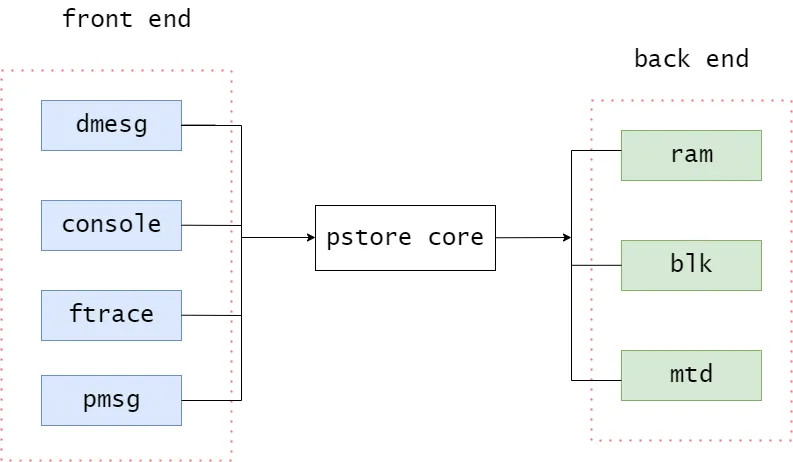
除此之外,pstore还设计了一套pstore文件系统,用于查询和操作上一次重启时已经保存的pstore数据。当该文件系统被挂载时,保存在backend中的数据将被读取到pstore fs中,并以文件的形式显示。
pstore工作原理
pstore 源文件主要有以下几个:fs/pstore/ram_core.c
fs/pstore/├── ftrace.c # ftrace 前端的实现├── inode.c # pstore 文件系统的注册与操作├── internal.h├── Kconfig├── Makefile├── platform.c # pstore 前后端功能的核心├── pmsg.c # pmsg 前端的实现├── ram.c # pstore/ram 后端的实现,dram空间分配与管理├── ram_core.c # pstore/ram 后端的实现,dram的读写操作文件创建
pstore文件系统位置在:
# ls /sys/fs/pstoreconsole-ramoops-0 dmesg-ramoops-0控制台日志位于 pstore 目录下的console-ramoops文件中,因为采用console机制,该文件中的日志信息也受printk level控制,并不一定是全的。
oops/panic日志位于 pstore 目录下的dmesg-ramoops-x文件中,根据缓冲区大小可以有多个文件,x从0开始。 函数调用序列日志位于 pstore 目录下的ftrace-ramoops文件中。
相关代码在inode.cpstore_mkfile里:
/* * Make a regular file in the root directory of our file system. * Load it up with "size" bytes of data from "buf". * Set the mtime & ctime to the date that this record was originally stored. */intpstore_mkfile(enum pstore_type_id type, char *psname, u64 id, int count,char *data, bool compressed, size_t size, struct timespec time, struct pstore_info *psi){........................ rc = -ENOMEM; inode = pstore_get_inode(pstore_sb);..............................switch (type) {case PSTORE_TYPE_DMESG: scnprintf(name, sizeof(name), "dmesg-%s-%lld%s", psname, id, compressed ? ".enc.z" : "");break;case PSTORE_TYPE_CONSOLE: scnprintf(name, sizeof(name), "console-%s-%lld", psname, id);break;case PSTORE_TYPE_FTRACE: scnprintf(name, sizeof(name), "ftrace-%s-%lld", psname, id);break;case PSTORE_TYPE_MCE: scnprintf(name, sizeof(name), "mce-%s-%lld", psname, id);break;case PSTORE_TYPE_PPC_RTAS: scnprintf(name, sizeof(name), "rtas-%s-%lld", psname, id);break;case PSTORE_TYPE_PPC_OF: scnprintf(name, sizeof(name), "powerpc-ofw-%s-%lld", psname, id);break;case PSTORE_TYPE_PPC_COMMON: scnprintf(name, sizeof(name), "powerpc-common-%s-%lld", psname, id);break;case PSTORE_TYPE_PMSG: scnprintf(name, sizeof(name), "pmsg-%s-%lld", psname, id);break;case PSTORE_TYPE_PPC_OPAL:sprintf(name, "powerpc-opal-%s-%lld", psname, id);break;case PSTORE_TYPE_UNKNOWN: scnprintf(name, sizeof(name), "unknown-%s-%lld", psname, id);break;default: scnprintf(name, sizeof(name), "type%d-%s-%lld", type, psname, id);break; }.................... dentry = d_alloc_name(root, name);....................... d_add(dentry, inode);................}pstore_mkfile根据不同的type,使用snprintf函数生成文件名name。生成的文件名格式为<type>-<psname>-<id>,其中type是enum pstore_type_id类型的一个值,psname是给定的psname参数,id是给定的id参数。
接着使用d_alloc_name函数为根目录创建一个目录项dentry,最后使用d_add函数将目录项dentry与索引节点inode关联起来,将其添加到文件系统中。
pstore_register
ramoops负责把message write到某个ram区域上,platform负责从ram读取存到/sys/fs/pstore,ok,先来看机制代码platform.c。
backend需要用pstore_register来注册:
/* * platform specific persistent storage driver registers with * us here. If pstore is already mounted, call the platform * read function right away to populate the file system. If not * then the pstore mount code will call us later to fill out * the file system. */intpstore_register(struct pstore_info *psi){structmodule *owner = psi->owner;if (backend && strcmp(backend, psi->name))return -EPERM; spin_lock(&pstore_lock);if (psinfo) { spin_unlock(&pstore_lock);return -EBUSY; }if (!psi->write) psi->write = pstore_write_compat;if (!psi->write_buf_user) psi->write_buf_user = pstore_write_buf_user_compat; psinfo = psi; mutex_init(&psinfo->read_mutex); spin_unlock(&pstore_lock); .../* * Update the module parameter backend, so it is visible * through /sys/module/pstore/parameters/backend */ backend = psi->name; module_put(owner);backend判断确保一次只能有一个并记录了全局psinfo。
看下结构体pstore_info:
structpstore_info {structmodule *owner;char *name;spinlock_t buf_lock; /* serialize access to 'buf' */char *buf;size_t bufsize;structmutexread_mutex;/* serialize open/read/close */int flags;int (*open)(struct pstore_info *psi);int (*close)(struct pstore_info *psi);ssize_t (*read)(u64 *id, enum pstore_type_id *type,int *count, struct timespec *time, char **buf,bool *compressed, ssize_t *ecc_notice_size, struct pstore_info *psi);int (*write)(enum pstore_type_id type,enum kmsg_dump_reason reason, u64 *id,unsignedint part, int count, bool compressed,size_t size, struct pstore_info *psi);int (*write_buf)(enum pstore_type_id type,enum kmsg_dump_reason reason, u64 *id,unsignedint part, constchar *buf, bool compressed,size_t size, struct pstore_info *psi);int (*write_buf_user)(enum pstore_type_id type,enum kmsg_dump_reason reason, u64 *id,unsignedint part, constchar __user *buf,bool compressed, size_t size, struct pstore_info *psi);int (*erase)(enum pstore_type_id type, u64 id,int count, struct timespec time, struct pstore_info *psi);void *data;};name就是backend的name了。
*write和*write_buf_user如果backend没有给出会有个默认compat func,最终都走的*write_buf。
if (!psi->write) psi->write = pstore_write_compat;if (!psi->write_buf_user) psi->write_buf_user = pstore_write_buf_user_compat;staticintpstore_write_compat(enum pstore_type_id type,enum kmsg_dump_reason reason, u64 *id, unsignedint part, int count,bool compressed, size_t size, struct pstore_info *psi){return psi->write_buf(type, reason, id, part, psinfo->buf, compressed, size, psi);}staticintpstore_write_buf_user_compat(enum pstore_type_id type,enum kmsg_dump_reason reason, u64 *id, unsignedint part,constchar __user *buf,bool compressed, size_t size, struct pstore_info *psi){... ret = psi->write_buf(type, reason, id, part, psinfo->buf,...}继续pstore注册:
if (pstore_is_mounted()) pstore_get_records(0);如果pstore已经mounted,那就创建并填充文件by pstore_get_records:
/* * Read all the records from the persistent store. Create * files in our filesystem. Don't warn about -EEXIST errors * when we are re-scanning the backing store looking to add new * error records. */voidpstore_get_records(int quiet){structpstore_info *psi = psinfo;//tj: global psinfo ... mutex_lock(&psi->read_mutex);if (psi->open && psi->open(psi))goto out;while ((size = psi->read(&id, &type, &count, &time, &buf, &compressed, &ecc_notice_size, psi)) > 0) {if (compressed && (type == PSTORE_TYPE_DMESG)) {if (big_oops_buf) unzipped_len = pstore_decompress(buf, big_oops_buf, size, big_oops_buf_sz);if (unzipped_len > 0) {if (ecc_notice_size)memcpy(big_oops_buf + unzipped_len, buf + size, ecc_notice_size); kfree(buf); buf = big_oops_buf; size = unzipped_len; compressed = false; } else { pr_err("decompression failed;returned %d\n", unzipped_len); compressed = true; } } rc = pstore_mkfile(type, psi->name, id, count, buf, compressed, size + ecc_notice_size, time, psi);if (unzipped_len < 0) {/* Free buffer other than big oops */ kfree(buf); buf = NULL; } else unzipped_len = -1;if (rc && (rc != -EEXIST || !quiet)) failed++; }if (psi->close) psi->close(psi);out: mutex_unlock(&psi->read_mutex); if needed,call pstore_decompress解压然后创建pstore文件by vfs接口pstore_mkfile。
pstore注册接下来是按类别分别注册:
if (psi->flags & PSTORE_FLAGS_DMESG) pstore_register_kmsg();if (psi->flags & PSTORE_FLAGS_CONSOLE) pstore_register_console();if (psi->flags & PSTORE_FLAGS_FTRACE) pstore_register_ftrace();if (psi->flags & PSTORE_FLAGS_PMSG) pstore_register_pmsg();psi->flags仍是由backend决定,只看pstore_register_kmsg和pstore_register_console。
pstore panic log注册
staticstructkmsg_dumperpstore_dumper = { .dump = pstore_dump,};/* * Register with kmsg_dump to save last part of console log on panic. */staticvoidpstore_register_kmsg(void){ kmsg_dump_register(&pstore_dumper);}pstore_dump最终会call backend的write,直接用全局psinfo。
/* * callback from kmsg_dump. (s2,l2) has the most recently * written bytes, older bytes are in (s1,l1). Save as much * as we can from the end of the buffer. */staticvoidpstore_dump(struct kmsg_dumper *dumper,enum kmsg_dump_reason reason){ ... ret = psinfo->write(PSTORE_TYPE_DMESG, reason, &id, part, oopscount, compressed, total_len, psinfo);kmsg_dump_register是内核一种增加log dumper方法,called when kernel oopses or panic。
/** * kmsg_dump_register - register a kernel log dumper. * @dumper: pointer to the kmsg_dumper structure * * Adds a kernel log dumper to the system. The dump callback in the * structure will be called when the kernel oopses or panics and must be * set. Returns zero on success and %-EINVAL or %-EBUSY otherwise. */intkmsg_dump_register(struct kmsg_dumper *dumper){unsignedlong flags;int err = -EBUSY;/* The dump callback needs to be set */if (!dumper->dump)return -EINVAL; spin_lock_irqsave(&dump_list_lock, flags);/* Don't allow registering multiple times */if (!dumper->registered) { dumper->registered = 1; list_add_tail_rcu(&dumper->list, &dump_list); err = 0; } spin_unlock_irqrestore(&dump_list_lock, flags);return err;}/** * kmsg_dump - dump kernel log to kernel message dumpers. * @reason: the reason (oops, panic etc) for dumping * * Call each of the registered dumper's dump() callback, which can * retrieve the kmsg records with kmsg_dump_get_line() or * kmsg_dump_get_buffer(). */voidkmsg_dump(enum kmsg_dump_reason reason){structkmsg_dumper *dumper;unsignedlong flags;if ((reason > KMSG_DUMP_OOPS) && !always_kmsg_dump)return; rcu_read_lock(); list_for_each_entry_rcu(dumper, &dump_list, list) {if (dumper->max_reason && reason > dumper->max_reason)continue;/* initialize iterator with data about the stored records */ dumper->active = true; raw_spin_lock_irqsave(&logbuf_lock, flags); dumper->cur_seq = clear_seq; dumper->cur_idx = clear_idx; dumper->next_seq = log_next_seq; dumper->next_idx = log_next_idx; raw_spin_unlock_irqrestore(&logbuf_lock, flags);/* invoke dumper which will iterate over records */ dumper->dump(dumper, reason);/* reset iterator */ dumper->active = false; } rcu_read_unlock();}pstore console 注册
staticstructconsolepstore_console = { .name = "pstore", .write = pstore_console_write, .flags = CON_PRINTBUFFER | CON_ENABLED | CON_ANYTIME, .index = -1,};staticvoidpstore_register_console(void){ register_console(&pstore_console);}->write最终也会call backend write:
#ifdef CONFIG_PSTORE_CONSOLEstaticvoidpstore_console_write(struct console *con, constchar *s, unsigned c){constchar *e = s + c;while (s < e) {unsignedlong flags; u64 id;if (c > psinfo->bufsize) c = psinfo->bufsize;if (oops_in_progress) {if (!spin_trylock_irqsave(&psinfo->buf_lock, flags))break; } else { spin_lock_irqsave(&psinfo->buf_lock, flags); }memcpy(psinfo->buf, s, c); psinfo->write(PSTORE_TYPE_CONSOLE, 0, &id, 0, 0, 0, c, psinfo); // tj: here spin_unlock_irqrestore(&psinfo->buf_lock, flags); s += c; c = e - s; }}ramoops
下面来看下RAM backend: ramoops,先看probe:
staticintramoops_probe(struct platform_device *pdev){structdevice *dev = &pdev->dev;structramoops_platform_data *pdata = dev->platform_data; ...if (!pdata->mem_size || (!pdata->record_size && !pdata->console_size && !pdata->ftrace_size && !pdata->pmsg_size)) { pr_err("The memory size and the record/console size must be ""non-zero\n");goto fail_out; } ... cxt->size = pdata->mem_size; cxt->phys_addr = pdata->mem_address; cxt->memtype = pdata->mem_type; cxt->record_size = pdata->record_size; cxt->console_size = pdata->console_size; cxt->ftrace_size = pdata->ftrace_size; cxt->pmsg_size = pdata->pmsg_size; cxt->dump_oops = pdata->dump_oops; cxt->ecc_info = pdata->ecc_info;pdata应该来源ramoops_register_dummy:
staticvoidramoops_register_dummy(void){ ... pr_info("using module parameters\n"); dummy_data = kzalloc(sizeof(*dummy_data), GFP_KERNEL);if (!dummy_data) { pr_info("could not allocate pdata\n");return; } dummy_data->mem_size = mem_size; dummy_data->mem_address = mem_address; dummy_data->mem_type = mem_type; dummy_data->record_size = record_size; dummy_data->console_size = ramoops_console_size; dummy_data->ftrace_size = ramoops_ftrace_size; dummy_data->pmsg_size = ramoops_pmsg_size; dummy_data->dump_oops = dump_oops;/* * For backwards compatibility ramoops.ecc=1 means 16 bytes ECC * (using 1 byte for ECC isn't much of use anyway). */ dummy_data->ecc_info.ecc_size = ramoops_ecc == 1 ? 16 : ramoops_ecc; dummy = platform_device_register_data(NULL, "ramoops", -1, dummy_data, sizeof(struct ramoops_platform_data));有几个可配参数:
/* * Ramoops platform data * @mem_size memory size for ramoops * @mem_address physical memory address to contain ramoops */structramoops_platform_data {unsignedlong mem_size; phys_addr_t mem_address; unsignedint mem_type;unsignedlong record_size;unsignedlong console_size;unsignedlong ftrace_size;unsignedlong pmsg_size;int dump_oops;structpersistent_ram_ecc_infoecc_info;};mem_size:用于Ramoops的内存大小,表示分配给Ramoops的物理内存的大小。mem_address:用于Ramoops的物理内存地址,指定用于存储Ramoops的物理内存的起始地址。mem_type:内存类型,用于进一步描述内存的属性和特征。record_size:每个记录的大小console_size:控制台记录的大小ftrace_size:Ftrace记录的大小pmsg_size:pmsg消息记录的大小dump_oops:是否转储oops信息的标志,表示是否将oops信息转储到Ramoops中。ecc_info:RAM的ECC(纠错码)信息,用于提供关于ECC配置和处理的详细信息。
有个结构表示了ramoops的context:
structramoops_context {structpersistent_ram_zone **przs;structpersistent_ram_zone *cprz;structpersistent_ram_zone *fprz;structpersistent_ram_zone *mprz;phys_addr_t phys_addr;unsignedlong size;unsignedint memtype;size_t record_size;size_t console_size;size_t ftrace_size;size_t pmsg_size;int dump_oops;structpersistent_ram_ecc_infoecc_info;unsignedint max_dump_cnt;unsignedint dump_write_cnt;/* _read_cnt need clear on ramoops_pstore_open */unsignedint dump_read_cnt;unsignedint console_read_cnt;unsignedint ftrace_read_cnt;unsignedint pmsg_read_cnt;structpstore_infopstore;};在ramoops_probe时也是把ramoops_platform_data的成员赋给了context对应的。要了解具体含义,继续probe:
paddr = cxt->phys_addr; dump_mem_sz = cxt->size - cxt->console_size - cxt->ftrace_size - cxt->pmsg_size; err = ramoops_init_przs(dev, cxt, &paddr, dump_mem_sz);if (err)goto fail_out; err = ramoops_init_prz(dev, cxt, &cxt->cprz, &paddr, cxt->console_size, 0);if (err)goto fail_init_cprz; err = ramoops_init_prz(dev, cxt, &cxt->fprz, &paddr, cxt->ftrace_size, LINUX_VERSION_CODE);if (err)goto fail_init_fprz; err = ramoops_init_prz(dev, cxt, &cxt->mprz, &paddr, cxt->pmsg_size, 0);if (err)goto fail_init_mprz; cxt->pstore.data = cxt;可见,是逐个init每个persistant ram zone,size一共有4段:
dump_mem_sz + cxt->console_size + cxt->ftrace_size + cxt->pmsg_size = cxt->sizemem_size就是总大小了,mem_address是ramoops的物理地址,record_size再看下oops/panic ram:
staticintramoops_init_przs(struct device *dev, struct ramoops_context *cxt,phys_addr_t *paddr, size_t dump_mem_sz){int err = -ENOMEM;int i;if (!cxt->record_size)return0;if (*paddr + dump_mem_sz - cxt->phys_addr > cxt->size) { dev_err(dev, "no room for dumps\n");return -ENOMEM; } cxt->max_dump_cnt = dump_mem_sz / cxt->record_size;if (!cxt->max_dump_cnt)return -ENOMEM;ok dump_mem_size大小的区域分成max_dump_cnt个,每个记录大小是record_size。
接着会call persistent_ram_new来分配内存给这个ram zone。
for (i = 0; i < cxt->max_dump_cnt; i++) { cxt->przs[i] = persistent_ram_new(*paddr, cxt->record_size, 0, &cxt->ecc_info, cxt->memtype, 0);console/ftrace/pmsg ram zone同上分配。
最后处理flags并注册pstore:
cxt->pstore.flags = PSTORE_FLAGS_DMESG; //tj: 默认dump oops/panicif (cxt->console_size) cxt->pstore.flags |= PSTORE_FLAGS_CONSOLE;if (cxt->ftrace_size) cxt->pstore.flags |= PSTORE_FLAGS_FTRACE;if (cxt->pmsg_size) cxt->pstore.flags |= PSTORE_FLAGS_PMSG; err = pstore_register(&cxt->pstore);if (err) { pr_err("registering with pstore failed\n");goto fail_buf; }来看下ramoops pstore的定义的callback,他们通过全局psinfo而来:
staticstructramoops_contextoops_cxt = { .pstore = { .owner = THIS_MODULE, .name = "ramoops", .open = ramoops_pstore_open, .read = ramoops_pstore_read, // psi->read .write_buf = ramoops_pstore_write_buf, //for non pmsg .write_buf_user = ramoops_pstore_write_buf_user, //for pmsg .erase = ramoops_pstore_erase, },};pstore使用方法
ramoops
配置内核
CONFIG_PSTORE=yCONFIG_PSTORE_CONSOLE=yCONFIG_PSTORE_PMSG=yCONFIG_PSTORE_RAM=yCONFIG_PANIC_TIMEOUT=-1由于log数据存放于DDR,不能掉电,只能依靠自动重启机制来查看,故而要配置:CONFIG_PANIC_TIMEOUT,让系统在 panic 后能自动重启。
dts
ramoops_mem: ramoops_mem { reg = <0x0 0x110000 0x0 0xf0000>; reg-names = "ramoops_mem";};ramoops { compatible = "ramoops"; record-size = <0x0 0x20000>; console-size = <0x0 0x80000>; ftrace-size = <0x0 0x00000>; pmsg-size = <0x0 0x50000>; memory-region = <&ramoops_mem>;};mtdoops
内核配置
CONFIG_PSTORE=yCONFIG_PSTORE_CONSOLE=yCONFIG_PSTORE_PMSG=yCONFIG_MTD_OOPS=yCONFIG_MAGIC_SYSRQ=y分区配置
cmdline方式:
bootargs = "console=ttyS1,115200 loglevel=8 rootwait root=/dev/mtdblock5 rootfstype=squashfs mtdoops.mtddev=pstore";blkparts = "mtdparts=spi0.0:64k(spl)ro,256k(uboot)ro,64k(dtb)ro,128k(pstore),3m(kernel)ro,4m(rootfs)ro,-(data)";part of方式:
bootargs = "console=ttyS1,115200 loglevel=8 rootwait root=/dev/mtdblock5 rootfstype=squashfs mtdoops.mtddev=pstore";partition@60000 { label = "pstore"; reg = <0x60000 0x20000>; };blkoops
配置内核
CONFIG_PSTORE=yCONFIG_PSTORE_CONSOLE=yCONFIG_PSTORE_PMSG=yCONFIG_PSTORE_BLK=yCONFIG_MTD_PSTORE=yCONFIG_MAGIC_SYSRQ=y配置分区
cmdline方式:
bootargs = "console=ttyS1,115200 loglevel=8 rootwait root=/dev/mtdblock5 rootfstype=squashfs pstore_blk.blkdev=pstore";blkparts = "mtdparts=spi0.0:64k(spl)ro,256k(uboot)ro,64k(dtb)ro,128k(pstore),3m(kernel)ro,4m(rootfs)ro,-(data)";part of方式:
bootargs = "console=ttyS1,115200 loglevel=8 rootwait root=/dev/mtdblock5 rootfstype=squashfs pstore_blk.blkdev=pstore";partition@60000 { label = "pstore"; reg = <0x60000 0x20000>;};pstore fs
挂载pstore文件系统
mount -t pstore pstore /sys/fs/pstore挂载后,通过mount能看到类似这样的信息:
# mountpstore on /sys/fs/pstore type pstore (rw,relatime)如果需要验证,可以这样主动触发内核崩溃:
#echo c > /proc/sysrq-trigger不同配置方式日志名称不同
ramoops
# mount -t pstore pstore /sys/fs/pstore/#cd /sys/fs/pstore/# lsconsole-ramoops-0 dmesg-ramoops-0 dmesg-ramoops-1mtdoops
# cat /dev/mtd3 > 1.txt# cat 1.txtblkoops
cd /sys/fs/pstore/lsdmesg-pstore_blk-0 dmesg-pstore_blk-1总结
pstore setup 流程:
ramoops_initramoops_register_dummyramoops_proberamoops_register查看 pstore 数据保存流程:
register a pstore_dumper// when panic happens, kmsg_dump is calledcall dumper->dumppstore_dump查看 pstore 数据读取流程:
ramoops_probepersistent_ram_post_initpstore_registerpstore_get_recordsramoops_pstore_readpstore_decompress(only for dmesg)pstore_mkfile(save to files)本文参考
https://heapdump.cn/article/1961461
https://blog.csdn.net/u013836909/article/details/129894795
https://zhuanlan.zhihu.com/p/545560128
https://docs.kernel.org/admin-guide/pstore-blk.html
最 后
小哥搜集了一些嵌入式学习资料,公众号内回复【1024】即可找到下载链接!
推荐好文点击蓝色字体即可跳转
☞专辑|Linux应用程序编程大全 ☞ 专辑|学点网络知识 ☞ 专辑|手撕C语言 ☞ 专辑|手撕C++语言
☞ 专辑|经验分享 ☞ 专辑|从单片机到Linux ☞ 专辑|电能控制技术 ☞ 专辑|嵌入式必备数学知识 ☞ MCU进阶专辑
☞ 经验分享


