关注+星标,每天学习Python新技能
因公众号更改推送规则,请点“在看”并加“星标”第一时间获取精彩技术分享
来源于网络,侵删
问题背景
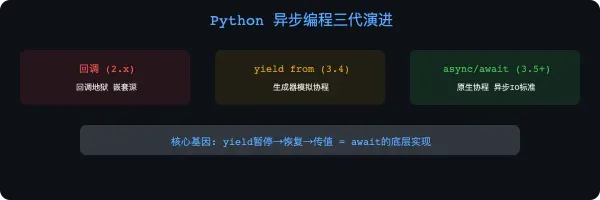
Python 的异步编程经历了三代演进:回调地狱 → yield from → async/await。很多开发者会用 async def 但不理解事件循环(Event Loop)怎么调度协程、await 和 yield 底层是什么关系、为什么 CPU 密集型任务不适合 asyncio。这篇文章从底层原理讲起,用可运行的代码逐层拆解。
▲ Python异步编程三代演进图——回调→yield from→async/await,标注每代的核心改进
第一层:生成器到协程 — yield 的本质
Python 协程的"基因"来自生成器。理解 yield 是理解 await 的前提。
# 生成器:可以暂停和恢复的函数def simple_gen(): print("Step 1") yield 1 print("Step 2") yield 2 print("Done")g = simple_gen()print(next(g)) # 输出: Step 1 → 1 (跑到第一个 yield,暂停)print(next(g)) # 输出: Step 2 → 2 (从上次暂停处继续,跑到下个 yield)# next(g) → StopIteration
生成器有三个关键能力:暂停执行(yield)、恢复执行(next/send)、传值(send 方法)。这三者恰好是协程需要的全部底层能力。
# 用生成器模拟协程调度def coroutine_a(): for i in range(3): print(f"A: {i}") yield # 主动让出执行权def coroutine_b(): for i in range(3): print(f"B: {i}") yielddef scheduler(*coros): """简易协程调度器""" iters = [c() for c in coros] while iters: for it in iters[:]: try: next(it) except StopIteration: iters.remove(it)scheduler(coroutine_a, coroutine_b)# 输出: A:0 B:0 A:1 B:1 A:2 B:2 (交错执行!)
第二层:事件循环 — asyncio 的心脏
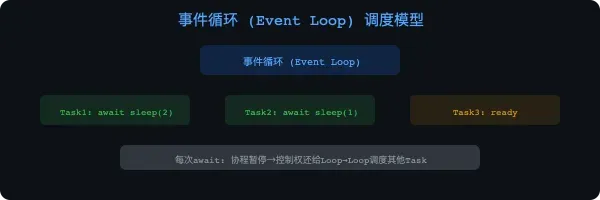
事件循环(Event Loop)本质上是一个"等待事情发生"的循环。它维护一个任务队列,不断检查哪些任务可以继续执行。
import asyncioasync def fetch_data(url, delay): """模拟网络请求""" print(f"开始请求 {url}...") await asyncio.sleep(delay) # 模拟 I/O 等待 print(f"{url} 响应完成 ({delay}s)") return f"data from {url}"async def main(): # 并发发起两个请求 start = time.time() task1 = asyncio.create_task(fetch_data("https://api1.com", 2)) task2 = asyncio.create_task(fetch_data("https://api2.com", 1)) # await 等待结果(这里 task2 会先完成) result1 = await task1 result2 = await task2 print(f"总耗时: {time.time() - start:.1f}s") # ~2.0s,不是 3.0s! print(result1, result2)asyncio.run(main())
关键理解:await asyncio.sleep(2) 不会阻塞线程!它把控制权交还给事件循环,事件循环去执行其他任务。2 秒后事件循环唤醒它继续执行。
事件循环的伪代码实现
class SimpleEventLoop: def __init__(self): self.ready = [] # 待执行的任务 def call_soon(self, coro): """添加一个就绪的协程""" self.ready.append(coro) def run_forever(self): """简化的事件循环""" while self.ready: coro = self.ready.pop(0) try: # 驱动协程到下一个 await coro.send(None) # 如果没抛 StopIteration,说明协程还在等 self.ready.append(coro) except StopIteration: pass # 协程执行完毕
▲ 事件循环调度图——Task1和Task2在EventLoop中交替执行,await时将控制权交还给Loop
第三层:async/await vs yield — 底层关系
# await 本质上是 yield 的语法糖# 下面两段代码等价:# 方式1:await 语法async def fetch(): data = await http_get("/api") return data# 方式2:yield from 等价(Python 3.4 时代)@asyncio.coroutinedef fetch(): data = yield from http_get("/api") return data
await 做的事情:① 将当前协程暂停 ② 将控制权交还给事件循环 ③ 等待 awaitable 对象完成后恢复到暂停点继续执行。这和之前 yield 做的"暂停-恢复-传值"完全一致。
第四层:Task — 让协程并发运行
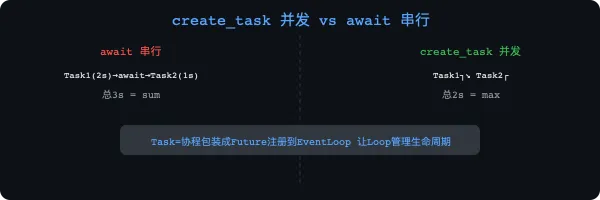
await coro() 是串行等待,create_task() 才是真正的并发:
# 错误写法:串行执行(总耗时 = sum)async def sequential(): r1 = await fetch("url1", 2) # 等 2s r2 = await fetch("url2", 1) # 再等 1s # 总耗时 3s# 正确写法:并发执行(总耗时 = max)async def concurrent(): task1 = asyncio.create_task(fetch("url1", 2)) task2 = asyncio.create_task(fetch("url2", 1)) r1 = await task1 # 等待时 task2 也在跑 r2 = await task2 # 总耗时 2s(最慢的那个)
Task 的本质:把协程包装成一个 Future 对象,注册到事件循环中,让事件循环管理它的生命周期。
# Task 的简化实现class Task: def __init__(self, coro): self.coro = coro # 被封装的协程 self._done = False self._result = None def __await__(self): """让 await task 可以工作""" while not self._done: yield # 自我暂停,等待被唤醒 return self._result def _wakeup(self, result): self._result = result self._done = True
▲ Task并发执行时序图——Task1和Task2同时注册到EventLoop,各自独立await,最短时间完成最长任务
第五层:实战 — 异步 HTTP 并发抓取
import asyncioimport aiohttpfrom typing import Listasync def fetch_url(session: aiohttp.ClientSession, url: str) -> dict: """抓取单个 URL""" try: async with session.get(url, timeout=10) as resp: data = await resp.json() return {"url": url, "status": resp.status, "data": data} except Exception as e: return {"url": url, "error": str(e)}async def batch_fetch(urls: List[str], concurrency: int = 10) -> List[dict]: """并发抓取多个 URL,限制并发数""" semaphore = asyncio.Semaphore(concurrency) async def fetch_with_limit(url): async with semaphore: async with aiohttp.ClientSession() as session: return await fetch_url(session, url) return await asyncio.gather(*[fetch_with_limit(u) for u in urls])# 使用urls = [f"https://jsonplaceholder.typicode.com/todos/{i}" for i in range(50)]results = asyncio.run(batch_fetch(urls, concurrency=20))print(f"完成 {len(results)} 个请求")
技术作用 `Semaphore`限制并发数,防止打爆对方服务器 `aiohttp`异步 HTTP 客户端,与 asyncio 原生配合 `asyncio.gather`并发执行多个协程,收集全部结果面试要点总结
考察点关键答案 async/await 底层依赖什么Python 生成器的 yield/send 机制 事件循环做了什么不断检查任务状态,执行就绪任务,挂起等待中的任务 `create_task` vs `await`await 是串行等待,create_task 注册并发 协程 vs 线程协程是用户态协作式调度,无上下文切换开销 什么时候不适合 asyncioCPU 密集型任务(阻塞事件循环,用 multiprocessing) await 本质是什么把协程暂停 + 控制权交还事件循环 + 等待结果恢复总结
Python 异步编程的核心不是 async/await 语法,而是事件循环 + 协程调度这个底层模型。理解了三件事就掌握了全局:① yield 让函数可以暂停和恢复 ② 事件循环是一个不断检查'谁可以继续执行'的循环 ③ await 就是把控制权交还给事件循环去处理其他任务。记住一个原则:I/O 密集型用 asyncio,CPU 密集型用 multiprocessing,两者混用用 ProcessPoolExecutor + run_in_executor。