用 “做菜” 讲明白:C 与 C++ 编程差异在哪?
- 2026-08-23 18:17:07
用 “做菜” 讲明白:C 与 C++ 编程差异在哪?大家好,我是小栈! 很多童鞋学完 C 再上手 C++,总觉得只是多了类、继承、虚函数这些语法,照着写却总写不出 “地道” 的 C++代码,甚至还在用 C 的思路写 C++ 程序 —— 这不是语法没学透,而是没搞懂两者编程思想的核心差异! 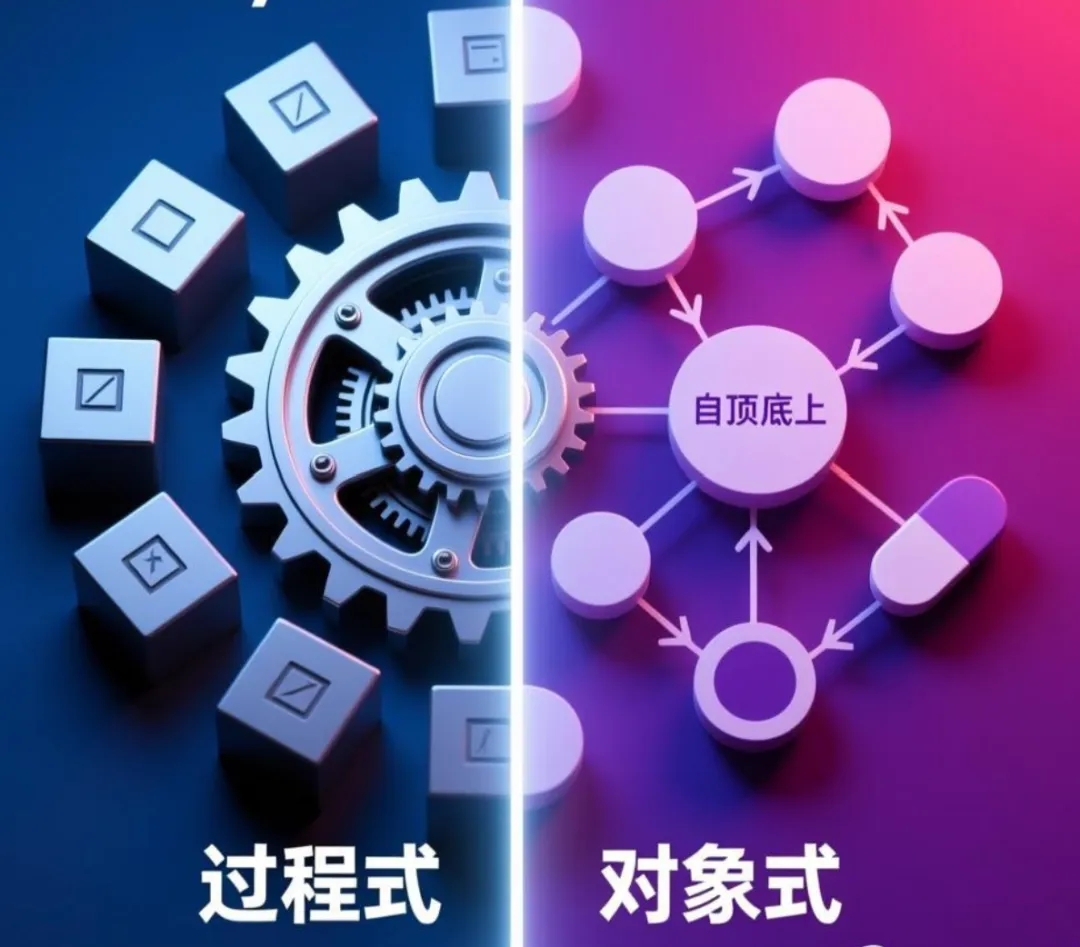
01 编程思想 一句话:C语言是面向过程的“执行者”,C++是面向对象的“设计者”。 
2)C++(面向对象)
所谓面向过程,以“函数/过程”为核心(函数驱动),按照函数调用顺序执行,按步骤实现功能。该思想关注的是“怎么做”。
所谓面向对象,以“对象”为核心(对象驱动),将不同的方法封装在在不同的类中,根据具体目的来调用相应的对象去实现。该思想关注的是“谁来做”。
我们来看一个通俗的例子,做一道菜:
1)面向过程思想:
按步骤执行 1.买菜 -> 2.洗菜 -> 3.切菜 -> 4. 炒菜 - > 5.装盘。
2)面向对象思想:
对象是 厨师(负责 炒菜),帮厨(负责 买菜、洗菜、切菜、装盘等),食材(包括 白菜、猪肉、鱼肉),炒锅(煮菜工具)。
这些对象各司其职,而非按步骤顺序进行。
大家是不是有直观的体会了?
02 代码比较
理解了编程思想,我们从代码层面进行解读。这里以学生成绩管理功能为例:
1)C语言(面向过程)
#include<iostream>#include<string>using namespace std;// 定义数据结构:存储学生信息(仅数据,无行为)struct Student {string name; // 姓名int id; // 学号int scores[3]; // 3门课成绩};// 函数1:计算总分(操作外部的Student数据)intcalculateTotalScore(const Student& stu){int total = 0;for (int score : stu.scores) {total += score;}return total;}// 函数2:打印学生信息(操作外部的Student数据)voidprintStudentInfo(const Student& stu){int total = calculateTotalScore(stu);cout << "学号:" << stu.id << endl;cout << "姓名:" << stu.name << endl;cout << "总分:" << total << endl;}intmain(){// 步骤1:定义数据Student stu;stu.name = "zgh";stu.id = 2025001;stu.scores[0] = 85;stu.scores[1] = 90;stu.scores[2] = 78;// 步骤2:按顺序调用函数(过程化执行)printStudentInfo(stu);return 0;}
从上述C代码中可以看出:数据与操作数据的函数相互隔离,顺序执行
数据(Student结构体)与操作数据的函数(calculateTotalScore/printStudentInfo)分离; 主函数按“数据定义 ->函数调用”的步骤顺序执行,核心是过程化; 若需要扩展功能(如修改成绩),需新增函数,维护成本较高。
#include <iostream>#include <string>using namespace std;// 定义类:封装学生的属性和方法class Student {private:// 私有属性:仅类内部可访问(封装性)string name;int id;int scores[3];public:// 构造函数:初始化对象属性Student(string n, int i, int s1, int s2, int s3) {name = n;id = i;scores[0] = s1;scores[1] = s2;scores[2] = s3;}// 方法1:计算总分(类内部方法,访问私有属性)intcalculateTotalScore() const {int total = 0;for (int score : scores) {total += score;}return total;}// 方法2:打印信息(类内部方法)voidprintInfo() const {int total = calculateTotalScore();cout << "学号:" << id << endl;cout << "姓名:" << name << endl;cout << "总分:" << total << endl;}// 可选:提供接口修改属性(封装的扩展,避免直接操作私有数据)voidsetScore(int index, int newScore) {if (index >= 0 && index < 3) {scores[index] = newScore;}}};intmain() {// 创建对象:通过类实例化,属性通过构造函数初始化Student stu("zgh", 2025001, 85, 90, 78);// 调用对象的方法:对象自主完成行为(“谁来做”)stu.printInfo();// 扩展:修改成绩(通过类提供的接口,保证数据安全)stu.setScore(2, 88);cout << "\n修改第3门成绩后:" << endl;stu.printInfo();return 0;}
从上述C++代码中可以看出:将数据与行为封装为一个类,绑定在一起
数据(name、score、id)私有化,避免被外部非法纂改;
数据与行为(计算、打印成绩等)绑定在一个类中,封装化;
新增功能只需在类内新增方法,不影响外部代码。
03 不同适用场景
1)C语言(面向过程编程)适用于嵌入式开发、底层库开发、操作系统内核开发等。
2)C++(面向对象编程)适用于大型工程、需模块化的复杂系统、跨平台开发。
写在最后
如果有童鞋想入门C++,可参考小栈之前的文章:别再怕 C++!入门其实很简单
你在从 C 转 C++ 的过程中,最头疼的思想卡点是什么?欢迎评论区滴滴!
本文来自网友投稿或网络内容,如有侵犯您的权益请联系我们删除,联系邮箱:596563534@qq.com 。
随机文章
-
 10个月宝宝每天需要喝多少奶粉?
- 喜报!伦先小学学子在青少年AI编程普及活动中斩获佳绩
- 【AI 早报】通义千问发布开源编程模型 Qwen3-Coder-Next;OpenAI 宣布 GPT-5.2 系列模型提速 40%
- AI智能机器狼 遥控编程随心玩 仿真声光音
- 摩尔线程推出首个全栈国产 AI 编程服务
- 教育部一等奖+1!复旦团队开创免疫“编程”新赛道
- Python编程小技巧--旋转加载器
- 培训机构 | 给娃选C++编程班,我花了三周把各大机构摸了个底朝天
- 学院动态||智码联盟编程社“腊月扫尘焕彩,岁末纳福迎新”新春焕新计划活动公告
- 2026年十大PLC可编程控制器公司一览
- 【少年创业篇】陪娃做木工编程后,我想让他的创意被世界看见